

In terms of the most important musicians of the modern era, Hank Williams has to rank somewhere near the top of that list. Emerging post-World War Two, this Alabama-born country boy would quickly become one of the biggest stars in the country, with his songs about loneliness, loyalty, love, loss, partying, and other themes, supported by his backing band The Drifting Cowboys. A member of the Grand Ole Opry, Williams released some of the most influential music before his real-life issues including his alcoholism and spina bifida caught up with him, leading to his premature death on New Year’s Day 1953.
To honour the great godfather of country, we look at the 10 greatest works of “The Hillbilly Shakespeare” Hank Williams.
#10. Lonesome Whistle
We are immediately introduced to one of the main through-lines of Hank’s work: lonesomeness.
Co-written with Jimmie Davis, the song focuses on the isolationism of prison – a commonplace theme for country music, partly because of Williams’ work. Williams is the piece’s protagonist, describing his heartbreak of long days in a prison in Georgia, becoming disillusioned with the world. He calls himself: “A number not a name” and comments, “I’ll be locked here in this cell, ‘til my body’s just a shell, and my hair turns whiter than snow”, the latter part even more poignant with the context of Hank’s young death.
Williams references a train that drives by within earshot. Williams mimics the sound of the whistle in the word “Lonesome”, with the sadness of this noise an expression of Hank’s own sorrow. Rolling Stone’s Joseph Hudak said of the track: “The sound is so stark, so unsettling, that it’s easy to feel exactly what Williams was getting at in the performance: simple heartbreak.”
In a mental and physical prison, Williams expresses his loneliness, which resonated and bagged him a 14th consecutive top 10 single in 1951.

#9. Hey Good Lookin’
Although written in 20 minutes, Hey Good Lookin’ has become one of Hank Williams’ most famous works.
Based on a 1942 song by Cole Porter, Williams wrote this playful ditty that many have seen as a blueprint of sort for the rock’n’roll genre that would surface within a few years’ time, as seen by references to a “hot rod Ford” and “soda pop”.
Filled with flirtation and double entendre, almost in a comically-timely manner, as if it were a song from a Stephen Fry and Hugh Laurie sketch. Yet it works with the cheesy nature making the track all the more endearing.
The track also features what appears to be self-deprecating humour with a line about owning a “two-dollar bill” (around $25 today). This uptempo number switches track from a flirtatious narrator to a loyal persona, with a pledge to become an official couple, offering to “throw [his] datebook over the fence”.
Footage of a live performance on The Kate Smith Evening Hour is one of few bits of video media that still exists of Williams on television.

The cheery song to Williams’ love interest has further cemented its legacy through a 2001 induction into the Grammy’s Hall Of Fame.
#8. Settin’ The Woods On Fire
Another partying anthem, Williams sings this upbeat single with gusto.
The song, actually written not by Hank but by Fred Rose – a close associate of Williams’ – uses several comparative adjectives such as “I’ll look swell but you’ll look sweller” and “You act proud and I’ll act prouder”, showing how grand his ole jamboree will be. It is known it will be only a night but nothing else matters other than right now with the momentous celebrations about to ensue.
The single gives the perspective of a loved-up couple who are simply set out for a good time, to have careless fun not caring “who thinks we’re silly.” This will feature a lively atmosphere including “two bowls of chilli”, showing off “a brand new dance that never has been done”, and doing “all the law’s allowing.”

The song’s theme is supported by a strong backbeat, keeping a jive rhythm that serves to create a real southern-style party-esque appeal.
#7. Lost On The River
Not a song you’ll see on many greatest Hank Williams songs lists, Lost On The River is a melancholy song about being lost on “the river of life.”
Played only on a solitary acoustic guitar, it is a song of sadness, with the abandonment of a lover, singing “Thinking of you and how my heart weeps, tomorrow you’ll be another man’s wife.”
Rather oddly, the song was sung alongside Hank’s partner Audrey Williams, upon initial release in 1948. Audrey often laid criticisms at Hank’s style of performance and despite herself being “a hard-boiled, blue-eyed bitch…[who was] horrible, unbelievably horrible” according to Louisiana Hayride producer Horace Logan. Williams himself once commented: “it’s rough to have a wife who wants to sing, but it’s hell to have a wife who wants to sing and can’t.”
A later solo recording serves the song better, with a slower pace and a singular focus on Hank’s soulful vocals. No Drifting Cowboys but a single, down-on-his-luck narrator singing from the heart about how he has become disillusioned and directionless in life after being ruined by his love.

#6. Kaw-Liga
A love story with a twist, this song about loving native Americans is based on…statues.
The song is based on the main character Kaw-Liga, who is a “wooden Indian”, who despite being an inanimate object, has still fallen in love with a fellow Cochtaw tribesperson, an unnamed maiden. However, as his heart is made of “knotty pine”, Kaw-Liga can never express his true emotions for his love.
Despite starting with tribal-like rhythmic drumming patterns, the song’s chorus picks up with a lively crescendo, which rhetorically and humorously remarks: “Is it any wonder that his face is red?” The chorus is followed by a vibrant violin solo section.

Never able to express his love, Kaw-Liga’s story ends in tragedy, with a wealthy customer buying the dime-store Indian (as they were known).
The song went on to hit number one on the Billboard Country chart shortly after Williams’ death, where it stayed for 14 weeks.
#5. You Win Again
The B-side of Settin’ The Woods On Fire, You Win Again was recorded on July 11th, 1952, just one day after finalizing his divorce from wife Audrey Williams (Sheppard). This, thus, gives the lyrics a much deeper sentiment.
The song’s lyrics paint a picture, telling a story of a lover who cannot leave their partner despite their infidelity. This infidelity should make the narrator leave but the defeated partner simply has grown to love their partner so much that their unfaithfulness is not cause for split. Each stanza ends with the solemn and downtrodden line “You win again.”
One of Hank’s greatest vocal performances, the pining, heartfelt effort by Hank aids empathy for the song’s narrator. The song contains the famous opening lines: “The news is out all over town, that you’ve been seen a-runnin’ around”, with even his reputation in the dirt, the song’s singer is still too in love to ditch his partner, with Hank singing, “I love you still, you win again.”
Hank, with a heavy heart, even deprecates himself for not seeing the signs, blaming himself, commenting “This heart of mine could never see, what everybody knew but me.”

The song brings itself full circle with the mournful verse: “I’m sorry for – your victim now, ’cause soon his head like mine will bow, he’ll give his heart but all in vain, and someday say: ‘you win again.’”
The song has become a standard country standard for its themes of love and loss. Although it is not exclusive to that genre, covered by everyone from The Rolling Stones to Ray Charles.
#4. Move It On Over
Move It On Over was one of Hank Williams’ earliest works still in circulation.
Recorded in 1947, the song is often cited as a precursor to the rock’n’roll genre, due to its twelve-bar blues structure, fast pacing, and rebellious lyrics. Hank’s first session at MGM proved to be a success, producing some of his classics, with Move It On Over being Williams’ first major hit single, earning him a placement in the Louisiana Hayride.
With a fast pace, the song has defiant lyrics of a husband in the “dog house” both literally and metaphorically. Each verse ends with the same form, telling her to “move” it on over, using various synonyms in the same lexical field, before declaring himself to be more empowered as a “mad dog”, “big dog”, etc., no longer playing the role of a worn-down husband.
The song is somewhat of a novelty anthem although was popular due to the relatability of the themes sung about in the song, resonating with others feeling neglected by their partners.
The song features a prominent steel guitar to give the song a more gritty and raw feel, adding to the outlawish nature of the song, backed by a stark violin.

A legendary Williams line is planted in the song too: “She warned me once, she warned me twice, but I don’t take no one’s advice.”
#3. I’m So Lonesome I Could Cry
Perhaps no Hank Williams’ song is more famous than 1949’s I’m So Lonesome I Could Cry.
Williams scored a high-charting single with this song. Yet Williams did not even write the track, with credit attributed to the uncelebrated Paul Gilley, named after another upcoming MGM single. On top of that, it was originally set to be spoken word. Moreover, it was only originally a B-side, with faster, more jovial songs favored for radio play.
Despite its rather bizarre origins, the single is highly regarded, attracting global acclaim. The song’s atmosphere is compounded by famous lyrics of birds, elsewhere depicted as chirpy features of the natural environment, sounding blue and forlorn. About the lyric: “Did you ever see a robin weep, when leaves begin to die?”, Bob Dylan said: “Even at a young age, I identified with him. I didn’t have to experience anything that Hank did to know what he was singing about. I’d never heard a robin weep, but could imagine it and it made me sad.”
Angus Batey of The Guardian describes how “The idea of narrative is abandoned for a series of bleak visions of desperate, aching loneliness, almost all involving sights from nature – a train passes through, but the only human soul we sense in this desolate landscape is the writer.” It is further added that the lyrics are ambiguous, with us never learning who the song is aimed at. He continues: “Williams’ taut, resilient performance compels because you can hear the efforts he’s making to keep alive the faintest hope that the situation might yet be resolved.”

With a single guitar, the eerie quietness of the solitary man in the studio adds to the allusion that Williams is a man singing into the distance with sheer hope keeping him alive, singing to no one. The emotions post-abandonment are so great a grown man can cry, an emotion that creeps through to even a macho audience. Williams expresses intense personal feelings with such a directness which utilises his atmosphere – largely through personification – to get across a simple point as poignantly as possible.
Of all people, it was perhaps Elvis Presley who best summed up the song on his Aloha From Hawaii NBC special, commenting I’m So Lonesome I Could Cry was the “saddest song I’ve ever heard.”
#2. Your Cheatin’ Heart
If I had one song to best display Hank Williams – in both sound and style, the song I would use is Your Cheatin’ Heart. Not for the first time on this list, it is a song about lost love, with infidelity occurring to the heartbreak of the narrator.
One of the most iconic country songs of all time was created about ex-fiancé (surprise, surprise(!)) Audrey Williams with the lyrics quickly dictated to his now-wife while Hank drove.
Hank’s bitterness is communicated with the song’s cheating heart a snide reference to Audrey, whose conscience will come back one day to hurt her. Her guilty feelings will soon come back to seemingly repossess her.
The song was recorded in a single take, the only time Hank would perform the song, a tune backed by an all-star cast of session musicians. Although never seeing its full impact, Williams – according to the eponymously-named autobiography of this song – called the song “the best heart song (he) ever wrote.”

Each line is topped off with the telling line “Your cheatin’ heart will tell on you.”
The song saw a new life when Hank died within a few months of the single. It topped the Country Billboard charts for six weeks, selling over one million units. It has since been ranked within the upper half of Rolling Stone’s 500 Greatest Songs Of All Time.
#1. Lost Highway
Those of you familiar with my work will know that – due to my ardent atheism – I find a lot of Hank’s religious works such as I Saw The Light and House Of Gold harder to appreciate (as good as they are) but even I can truly appreciate the greatness of Lost Highway. The best work of Hank Williams.
This song’s influence has served the subsequent music scene greatly. Although Hank did not write this particular track, he helped popularise it to a wider audience.
The opening line: “I’m a rolling stone, all alone and lost”, deriving from Biblical times, has served as inspiration for Bob Dylan’s Like A Rolling Stone and later the naming of The Rolling Stones. It has become a standard and classic work of Williams as many people’s favourite work, showing how effectively Williams crafted and adapted Lost Highway.
The song, as expected, sings about life’s vices including drinking, gambling, and unfaithfulness, having “paid the price” for his life’s deviances.
The narrator is painted as a once-successful, or at least once-sufficient, man whose sinful ways have led to a hopeless, directionless life. Now seemingly destitute and on the “lost highway”, Williams encapsulates feelings of disillusion, fear, and sorrowful anticipation.

One of Hank’s strengths is constructing evocative and impactful closing lines 0 and this is no different: “Take my advice or you’ll curse the day, you started rollin’ down that lost highway.”
The song may have best been summed up by The Guardian who put it thus: “an everyman doomed by luckless love to roam, rootless and alone, in constant search of redemptive purpose. Williams’ struggle to reconcile the sacred and the profane certainly helped him…but it’s his voice – cracked, careworn but never tired – that makes this the definitive reading of an all-time classic, and a high point in a career that had more than its share.”
It is for all of this that Lost Highway is my pick for the greatest work of Hank Williams.
Hank Williams: The Hillbilly Shakespeare
What more is there to say that shows the innovation and creation of country’s true megastar Hank Williams?
Williams helped not only with the creation of new genres such as rock’n’roll but set the standard for country music including through his smorgasbord of themes presented in a simple yet compelling and emotive style. His description upon winning a 2010 Pulitzer Prize described him as having “craftsmanship as a songwriter who expressed universal feelings with poignant simplicity and played a pivotal role in transforming country music into a major musical and cultural force in American life.”
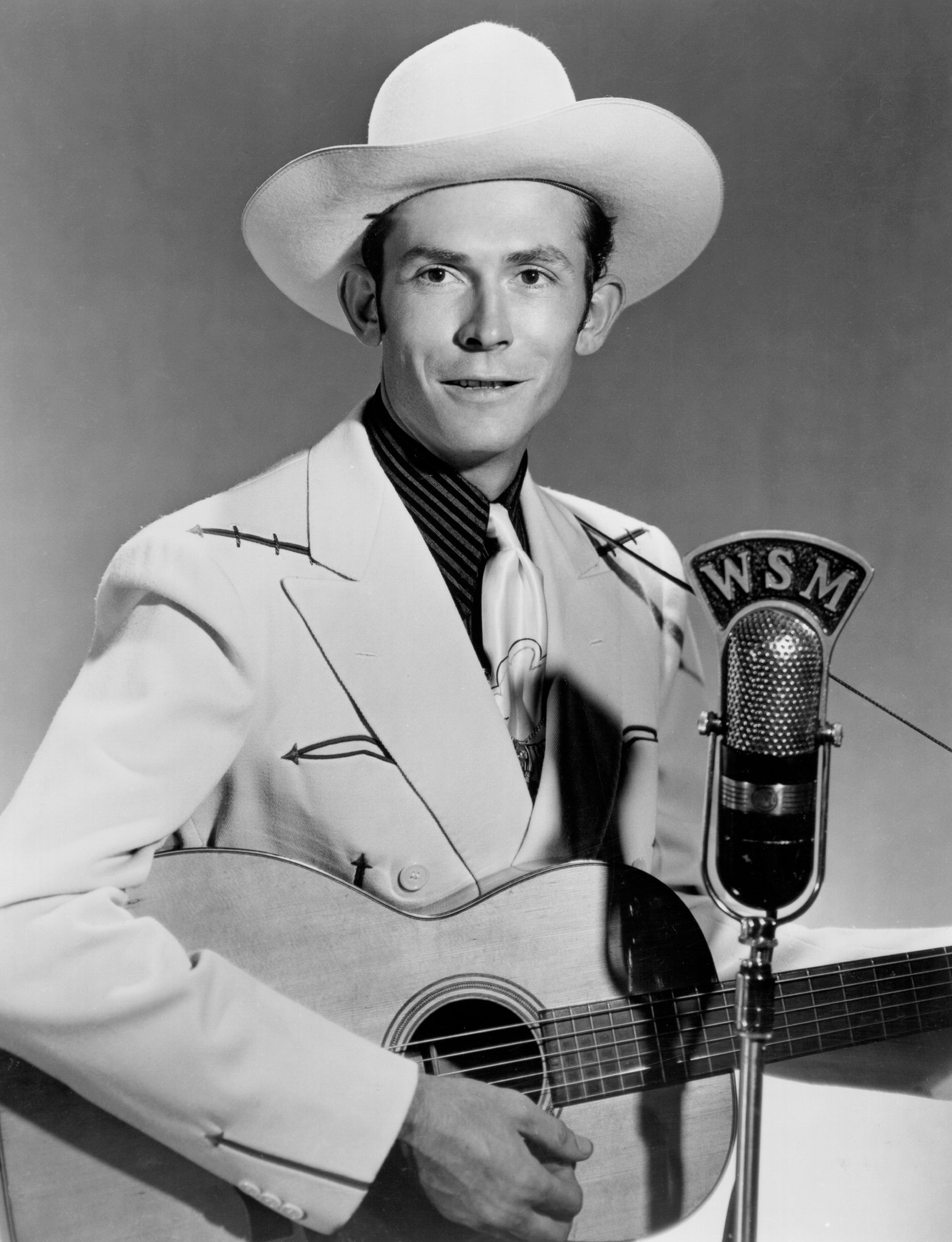
When talking of post-war heroes, Hank has to be top of the musical hierarchy for that era, spreading country music to a wider commercial audience whilst also staying true to country music.
Although Hank saw some success in his lifetime, it is incredibly sad and, considering his song’s subject matter, ironic that Williams died without being able to see how his legacy would only further blossom in the coming decades.
Hank himself once humbly proclaimed: “I think I’m good enough to play and sing.” Yes, indeed you are Hank. Love live the Albama cowboy!