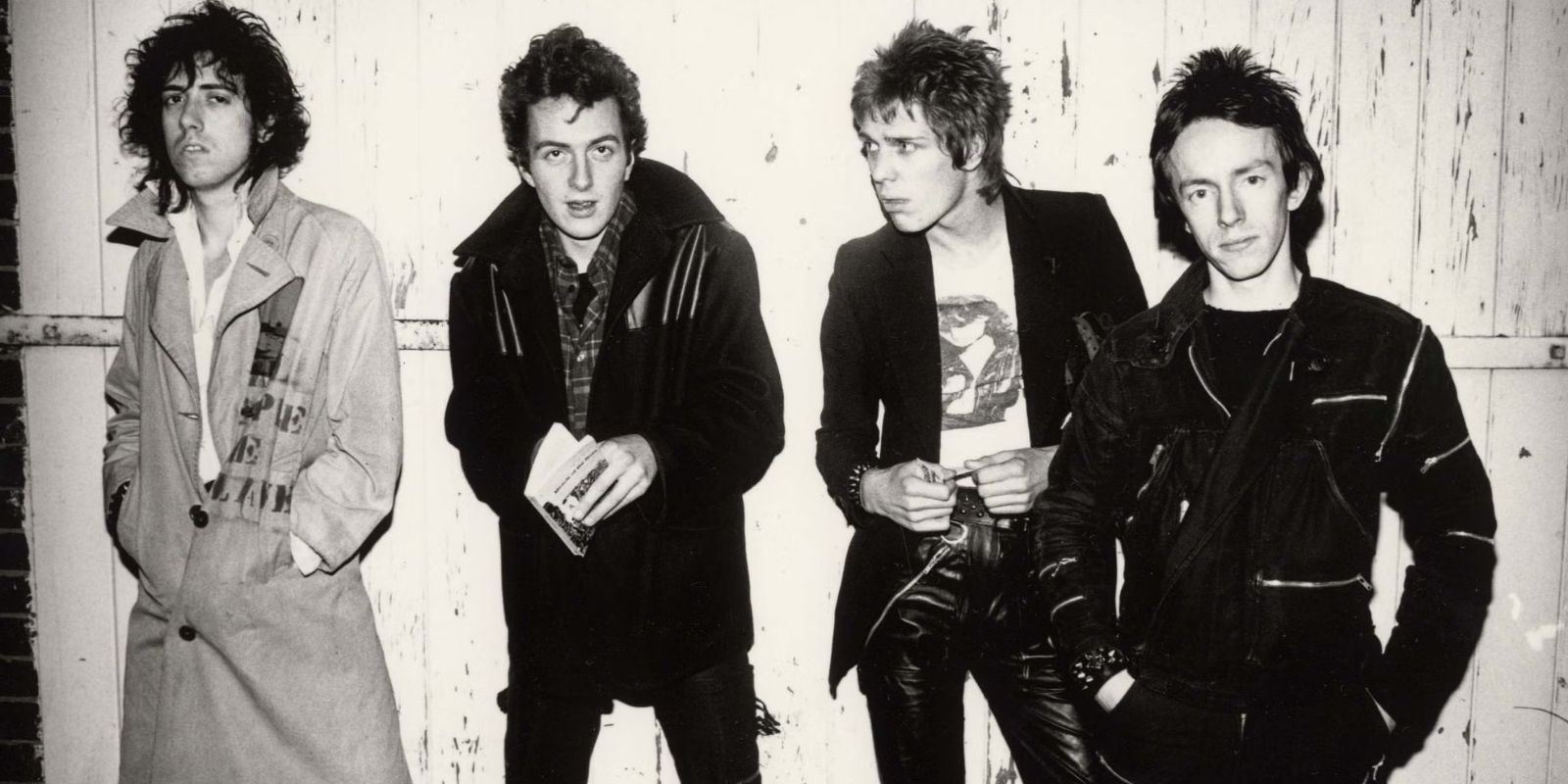
Few songs may have as much of a relatable theme as “I Fought The Law”, in which the author took on the authorities and “the law won.” Through three different versions of the track, we will look at how the song, described by The Financial Times having “started out as an obscure album track…became a classic rebel yell of rock, then punk”, has gained such a status.
It is a three-pronged story; The Crickets wrote the track, it was refined and commercialised by The Bobby Fuller Four, whilst further popularised by The Clash.
The Crickets
“I Fought The Law” was written by The Crickets’s Sonny Curtis in the late 1950s. The still-living songwriter reflected: “I wrote it in my living room in West Texas one sandstormy afternoon…it took me about 20 minutes.”
Released in December 1960 – the year after the death of The Crickets famous frontman Buddy Holly – lead vocals were sung by the little-known new singer Earl Sinks. Sinks had actually already left the band by the release of the track, doing so in February.
As music journalist Paul Sexton notes about the lyrical content: “His brief reign of lawlessness…ends with his incarceration and ruthless punishment: even as the song opens, he is forlornly breaking rocks in the hot sun. To make things worse, he’s lost his girl along the way. A cautionary tale indeed.”
Notably, the song was produced by long-time Buddy Holly producer Norman Petty, who has songwriting credits on several of his most famous tracks, including “Not Fade Away”, “Everyday”, “Oh Boy!”, “Maybe Baby”, and “Rave On”.
The band would also be the first to record “More Than I Can Say”, a hit that would give Leo Sayer a runner-up single on both sides of the Atlantic.
A rather inconspicuous start for the song, it would become more refined after a cover by The Bobby Fuller Four.
The Bobby Fuller Four
1965 saw a cover released by the Texas group The Bobby Fuller Four.
Previously a regional hit in El Paso, it became a nationwide hit on Del-Fi Records sister record label Mustang Records. The band’s signature song, it was a Billboard Hot 100 top 10 single for the group.
As well as a cleaner, more guitar-heavy, more explosive sound, it differs from the original in one line in particular. Fuller explained: “That line that says ‘robbing people with a zip gun,’ most people don’t know what a zip gun is.” According to Merriam-Webster, a zip gun is a “crude homemade single-shot pistol.”
Instead, Fuller changed this line to a “six-gun”, adding a prominent drum fill during the word, although an earlier demo had Fuller singing about a “shotgun”.
Just six months after “I Fought The Law” impressed on the Billboard charts, Bobby Fuller was found dead, aged just 23. Like Holly before him, he had died young and with unfulfilled potential, with his death – in which his body was found bruised, burned, and bloody – still a mystery.
That is not to say the song’s impact is tempered; in 1966, George Harrison called The Bobby Fuller Four his most listened-to group whilst the track was ranked the 175th Greatest Song of All Time by Rolling Stone.
The Clash
As Louder Sound noted, “both the Crickets and the Fuller versions rode on a jaunty, jangly, almost-mariachi strumming pattern, along with renegade lyrics (‘a-robbing people with a zip/six gun’), and a clean-cut vocal delivery that seemed oddly incongruous.” It is true that the song was always disconnected from the men singing; a song about the worst of crimes and the dismal punishments sung by men in suits, singing with clean vocals, in songs with crisp guitar work.
A change to that formula was implemented by punk rockers The Clash.
A part of the Cost of Living EP, the cover idea came to lead singer Joe Strummer and founder Mick Jones when in San Francisco doing overdubs for their last album when the track came on the jukebox. As Jones put it: “we would try to copy it but bring something of our own to it.”
That they did, creating a far punkier take on the classic, changing it to “I killed” rather than “I left” my baby, and creating a dingier sound through playing on the pipes in a public toilet.
Moreover, the song’s music video added intensity to the track, with footage of police dogs, men in balaclavas, and tanks.
Although made in 1979, it was not released until 1988, when it would enter the UK charts, although a prior live version had been used at the end of the 1980 film Rude Boy.
Epilogue
That is the story of how three unique versions of the same blueprint of a track have made it into a classic rock standard.
They are far from the only men to cover it, with worldwide megastars having also made contributions. Among the best known are Bruce Springsteen, The Ramones, Tom Petty, The Grateful Dead, Status Quo, Green Day, the Dead Kennedys, Bryan Adams, and Waylon Jennings – just to name a few!
As the website American Songwriters points out: “The intricate part is the way the song has been recorded and interpreted through the years. From West Texas to New York City to Milwaukee to Nashville to England to the Super Bowl.”
GRIFFIN KAYE.
Leave a Reply