Hello and welcome to a new series here on Lace ‘Em Up, as will be exploring the history of Presidential Elections of the United States of America.
In this series, I’ll be going over every presidential election in U.S. History all the way to the 2020 election.
Along the way, I will be discussing some important and lesser-known bits of trivia when it comes to the men and women who’ve taken part and the impact these elections have left on America today…Let’s get into it by talking about the very first presidential election.
Establishing The Constitution

In June of 1788, the U.S. Constitution was ratified into law which set the blueprint for important things like the power of Congress, the roles of the President and Vice President, the powers of the Supreme Court, the ability to add news states into the country and using a system called the electoral college for presidential elections.
This system would allow electors from each state to cast votes to determine the winner thus becoming president while the second place winner became the VP.
Despite growing opposition in some states, there was enough support to get the Constitution passed into law by the time of the first presidential election.
The Candidates

Because telegram and other communication devices didn’t exist yet, the first presidential election became the only election to occur in two years as it went on from December 15th 1788 to January 10th 1789.
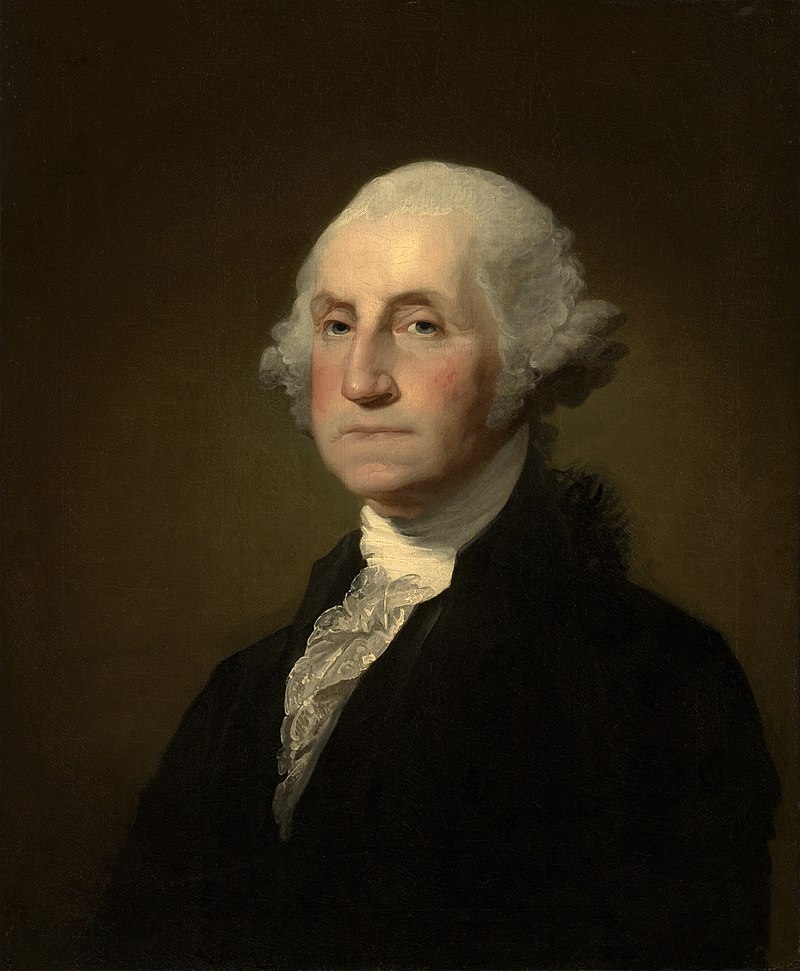
Known for his bravery and determination in the Revolutionary War, General George Washington was one of the most popular men in the early stages of the United States; Although some wanted him to assume the role of king, he refused to do so. Instead, he was chosen to become the country’s first President even though Washington himself never wanted to be President in the first place.
With Washington being the obvious choice for President, the focus quickly centered on who would become the vice president. Names who were interested like John Adams, John Jay, John Hancock and Samuel Huntington were seen as ‘Federalists’ aka those who supported ratifying the Constitution.
Meanwhile, those who didn’t support its ratification like VP candidate George Clinton were called ‘Anti-Federalists’ as they disagreed with the Federalists on a number of issues which will lead to the rise of a new political party called ‘the Democratic-Republicans’.

The Election of 1788-89: The Results
When the votes were all counted, George Washington won 69 electoral votes to become the first President of the United States and the only candidate in American history to ever win 100% of the electoral votes.
Despite this victory, there were some caveats with the voting process as Vermont wasn’t officially recognized as a state and some states like Connecticut didn’t have a popular vote. On top of that, other states like North Carolina and Rhode Island didn’t ratify the Constitution yet, so they were unable to vote in this election.
As you could probably tell from looking at the map above, New York had zero electoral votes which is unusual, but that’s due to the New York legislature being deadlocked with their votes and as such their electoral votes were not counted…They only time something like that has ever happened.
John Adams came in second place receiving 34 electoral votes becoming the first Vice President in American History thanks to Alexander Hamilton, who persuaded enough people to throw their votes to other candidates to avoid a deadlock or possibly John Adams becoming the accidental first President.
If you like this kind of content, be sure to leave your thoughts down below in the comment section and be sure to follow Lace ‘Em Up on Twitter @laceemupoffice and you can follow me also on Twitter @hakeemfullerton and I’ll see you in the next article.
Leave a Reply