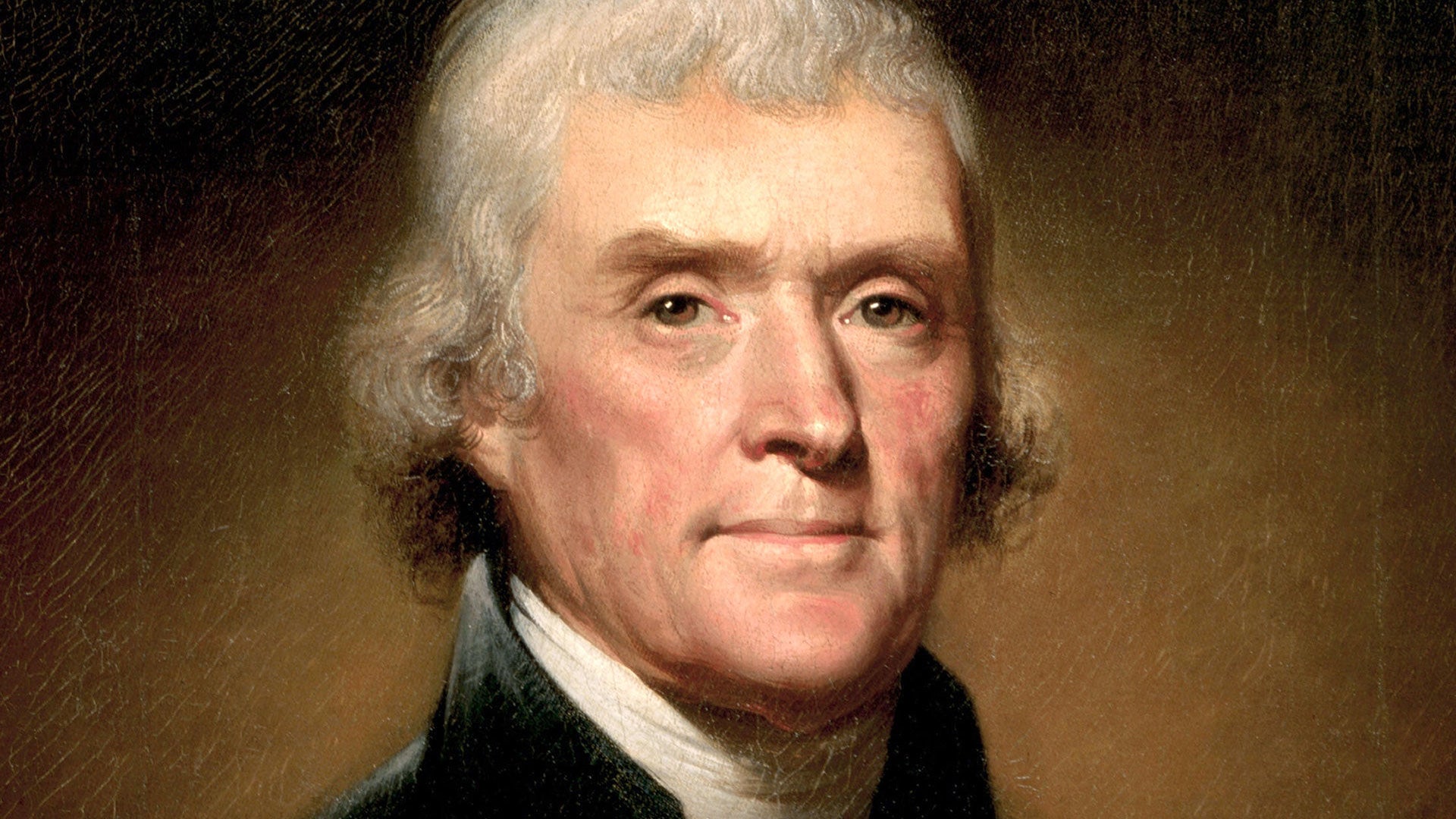
Hello and welcome back to another edition of Lace ‘Em Up’s Presidential Election series for today we will be going over the Election of 1804. Thomas Jefferson is looking to become a two term president, but the Federalists are sending a war hero in the form of Charles Pinckney to try and stop him.
Jefferson’s Administration & The Louisiana Purchase

After squeaking out a victory in the election of 1800, Jefferson and his Democratic-Republicans have spent the last four years dismantling almost every bit of legislation the Federalists passed into law while also reducing the amount of spending within the government and shrink the size of the military.
Jefferson also managed to reduce the country’s debt, continued international trading with other nations and acquired new territories that would eventually become the states of Wyoming, North and South Dakota, Colorado, Minnesota, Oklahoma, Arkansas, Nebraska, Kansas, Iowa, Missouri and Louisiana after striking a deal with Napolean Bonaparte to get this new land in exchange for billions of dollars.
The Louisiana Purchase (as it was called), saw Jefferson break one of his biggest promises which was to limit executive power in the government, but regardless Jefferson was hugely popular with many Americans, and he had little opposition when it came to getting re-nominated.
There is one major change going into the 1804 election however, and that would be Jefferson’s pick for running mate.
Hamilton’s Death

Since the controversial conclusion to the contingent election between Aaron Burr and Thomas Jefferson, Burr has reluctantly been working with Jefferson as his Vice President while at the same time having a deep seeded hatred for Alexander Hamilton, the man who cost him the Presidency due to Hamilton’s persuasion over the House of Representatives.
Hamilton’s life meanwhile hasn’t been so good either with his constant meddling in the previous presidential elections, his affair with Maria Reynolds who was a married woman and the revelations that this affair led to extortion and blackmailing by Maria and her husband has badly damaged Hamilton’s reputation in politics.
Ultimately on July 11th, 1804, Aaron Burr duelled with and killed Alexander Hamilton; Not only did this end the life of the Federalist Party Founder, but it also ended the political career of Aaron Burr who would go to trial for his shooting of Hamilton, but the charges were eventually dropped.
Jefferson soon tried to distance himself from Burr and come the 1804 election, Jefferson would choose the former Governor of New York, George Clinton as his new pick for Vice President.
The Federalist Party Ticket

With John Adams retiring from politics soon after the election of 1800 and the death of Alexander Hamilton, the Federalist Party’s chances of winning this time around look very bleak.
The party nevertheless nominates Charles Pinckney as their candidate for President with former New York Senator Rufus King as his running mate. Pinckney, who had run for president in the previous elections was also a former U.S. Ambassador to France and a hero of the Revolutionary War; While Rufus King was a founding father, a lawyer and the U.S. Ambassador to Great Britain.
The strategy for the Federalist Party in this election is to see if they could gather up some Southern votes with Pinckney at the head of the ticket while at the same time keeping the majority of states they had won in 1800. On top of that, they’re also criticizing Jefferson’s purchase of the Louisiana Territories as unconstitutional and their even bringing up claims that Jefferson was having an affair with a female slave he owned by the name of Sally Hemings.
One other thing to mention is that this is the first presidential election to occur after the ratification of the 12th Amendment to the Constitution. This means that the old rule of the person coming in second place in the election becomes the Vice President is now null and void. Now, all future elections would see people casting their ballots for both the presidential and vice presidential candidates on the same ticket.
The Election of 1804: The Results

Thomas Jefferson easily won re-election receiving 162 electoral votes, you only needed 89 electoral votes to win this time around, so it’s safe to say that Jefferson won pretty handily.
In terms of the popular vote, Jefferson won 72.8% of the popular vote which is not only the highest amount of the popular vote for a re-elected president (since George Washington) but it’s also the highest for a Presidential candidate since the two-party system began.
Charles Pinckney only received 14 electoral votes and 27.2% of the popular vote with Pinckney picking up two states (Connecticut and Delaware). Jefferson was able to pick up 15 states in this election even some Federalist states like New York and Massachusetts.
Jefferson’s 45.6% margin in the popular vote remains the most lopsided in U.S. election history, not only that but he would become the first of two Vice Presidents to be elected and re-elected as President.
If you like this kind of content, leave your thoughts in the comment section and be sure to follow Lace ‘Em Up on Twitter @laceemupoffice and you can follow me also on Twitter @hakeemfullerton and I’ll see you in the next article.
Leave a Reply