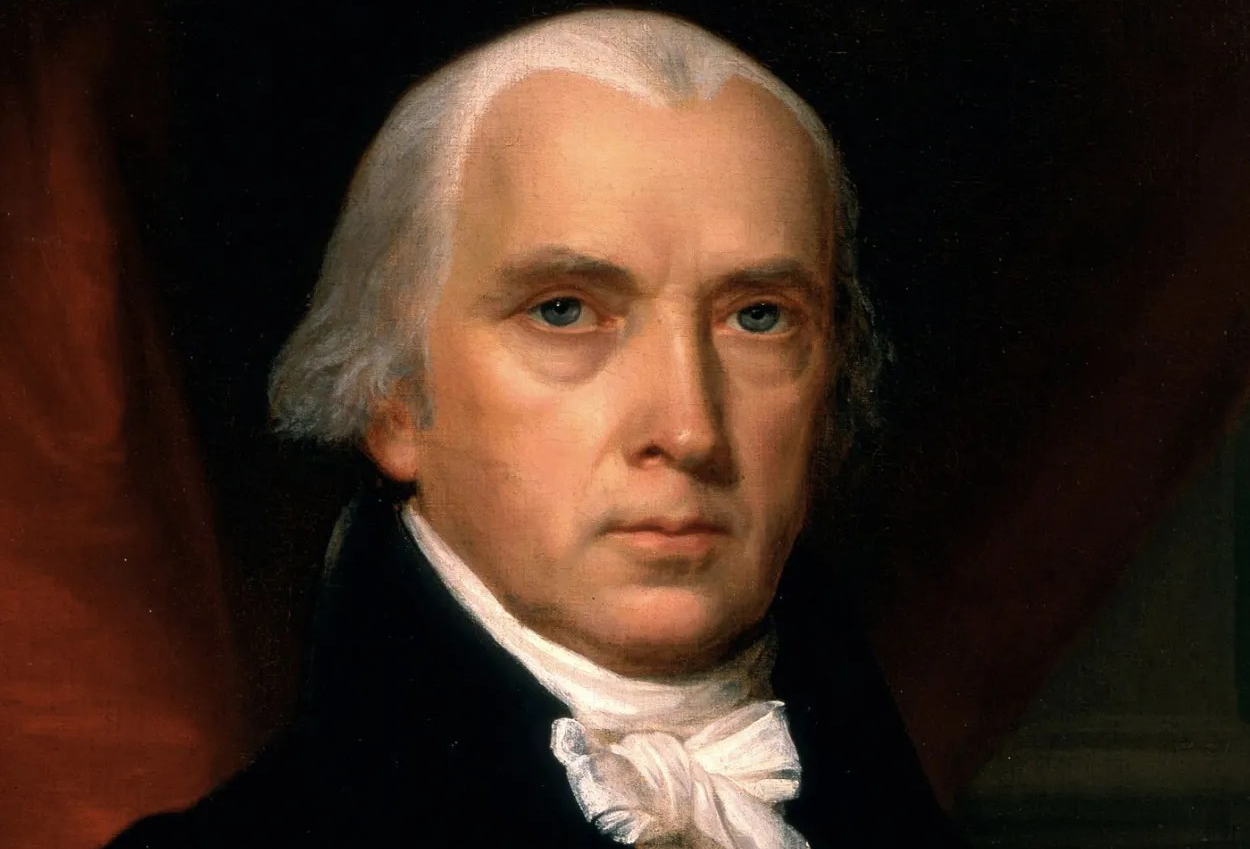
Hello and welcome back to another edition of Lace ‘Em Up’s Presidential Election series for today we will be going over the Election of 1808. Charles Pinckney is back once again to take down another Democratic-Republican in the form of James Madison…But will the Federalists be successful this time around? Let’s find out.
The Embargo Act of 1807

Incumbent President, Thomas Jefferson decides to follow in George Washington’s footsteps and refused to run for a third term thereby officially honouring the two-term tradition Washington started back in 1796.
While Jefferson was popular with many in his party, most of the country weren’t too happy with Jefferson thanks to his signing of ‘The Embargo Act Of 1807‘, which was used as a way to stop all trading with Great Britain in the hopes of punishing them for making a fool out of the U.S. when it came to taking American soldiers and naval ships.
Unfortunately, the only nation that was suffering from the Embargo Act was the U.S. itself as their economy began to falter over the lack of overseas trading, plus Britain didn’t really get all that affected in the short or long term. This led to states that found trading a necessity like New England to sour on the Jefferson Administration and helped to give the Federalists Party hope that they could be able to defeat the Democratic-Republicans in the next election.
James Madison: Jefferson’s Right-Hand Man

While the Embargo Act became a major stain on Jefferson’s presidency, he was still popular upon leaving office and his Secretary of State, James Madison decides to run for the high office.
Madison is famously known as the ‘Father of the Constitution’ as he took part in ratifying the U.S. Constitution as well as making the Articles of Confederation, the Bill of Rights and is one of the writers of the Federalist papers, so this is a guy who has a lot of accomplishments under his belt.
Madison was also a Federalists in the early part of the nation’s history, but after the proposal of a national bank was brought up, he left the party to form the Democratic-Republicans with Thomas Jefferson and became the future president’s ally which helped Madison greatly as the third president would make him the next Secretary of State.
Despite being one of the founding members of the party, there were some who didn’t want to see Madison become the new president due to his previous history as a Federalists and as a result a few challengers tried to get the nomination.
One of them was James Monroe, the former U.S. Ambassador to Great Britain and someone who wasn’t pleased with the current administration’s use of government power when it came to the Louisiana Purchase or the Compact of 1802, which allowed the U.S. to acquire areas of land that will be Alabama and Mississippi.
On the other side, you have a group of Democratic-Republicans who aren’t happy with the Embargo Act and the possibility of another Virginian as President, so they try to nominate Jefferson’s Vice President, George Clinton.
At the end of the day, Madison gets the nomination thanks to a congressional caucus, which was used to determine presidential candidates at the time. Despite Madison becoming the nominee, a number of people in a district of New York ended up voting for George Clinton in the general election, even though Clinton was named Madison’s running mate…awkward.
Guess Who’s Back….Back Again….Pinckney’s Back….with Rufus King

As mentioned previously, The Embargo Act of 1807 really screwed over many states that found trading with foreign nations like Great Britain a necessity, so the Federalists believe that this backlash over the Embargo Act and the fact that many Democratic-Republicans aren’t too keen on Madison, gave them hope that they might have a chance at winning the election.
The Federalists nominated the same people they did in 1804 for president and vice president in Charles Pinckney and Rufus King.
Pinckney’s popularity in the South and Rufus King’s connections in the North again seemed like an appealing ticket and combined with the fact that the Federalists could easily win votes in New England states because of the Embargo Act, looked to be a winning strategy…But was it though?
The Election of 1808: The Results

As election day arrived and the results are tallied up, it appears that the Federalists did much better than they did in 1804 winning the states of New Hampshire, Rhode Island and Massachusetts while also keeping the states they won previously like Delaware, Connecticut and even got a few votes in Maryland and North Carolina.
Unfortunately for the Federalists it’s just not enough, as James Madison wins the election to become the fourth president in American History with 122 electoral votes to Charles Pinckney’s 47 votes.
In terms of the popular vote, it was another lopsided defeat for the Federalists as Madison received 64.7% to Pinckney getting 32.4% which is half of what James Madison got.
A number of people decided to vote for George Clinton which resulted in the former Governor of New York getting six electoral votes. In addition to winning some votes in this election, George Clinton became the first of two VPs in American history to be re-elected Vice President with a different person at the head of the ticket.
If you like this kind of content, leave your thoughts down below and be sure to follow Lace ‘Em Up on Twitter @laceemupoffice and you can follow me also on Twitter @hakeemfullerton and I’ll see you in the next article.
Leave a Reply