Throughout parliamentary history, dozens of parties have resided in the House of Commons chamber from today’s mainstream Conservatives and Labour to more minor organisations such as Sinn Fein and Plaid Cymru to parties from days long past such as the Whig and Social Democratic Party. However, whilst all those have seen their fair share of MPs, the following five parties have had only a solitary spokesperson sitting in the nation’s legislature.
Please note this list Is not exhaustive. It also will not feature regional parties that only stood in particular areas such as the Scottish Prohibition Party or the Independent Kidderminster Hospital and Health Concern.
Reclaim Party (Andrew Bridgen)

Prior to 2023, Andrew Bridgen had been a rather rebellious backbencher, having supported efforts to topple all four Conservative prime ministers since 2010.
In January, Bridgen lost the Conservative whip when he tweeted that Covid-19 vaccines were “the biggest crime against humanity since the Holocaust.” His comments were widely criticised by Conservative MPs, including former Health Secretaries Matt Hancock and Savid Javid as well as Prime Minister Rishi Sunak.
Shortly after being expelled from the Tory Party, Bridgen defected to Lawrence Fox’s Reclaim Party. The Reclaim Party is a far-right political group, described by one Westminster source in The Telegraph as like “UKIP for culture” due to their emphasis on social conservatism.
Upon switching allegiances, Bridgen has decided not to contest a by-election and seems keen on standing again at the next election, even if he is extremely unlikely to win.
He explained his reasoning for joining the party, citing the party’s principles of “science over dogma, public interest over vested interest, hope over fear, truth over lies, freedom over subservience.”
Notably, Bridgen is the only elected Reclaim politician in the country, with no representatives at a local level. Moreover, by-election results have seen the party lose their deposit.
UPDATE: Since this piece was written, Bridgen now sits as an Independent, resigning from Respect in December 2023, citing “a difference in the direction of the Party.”
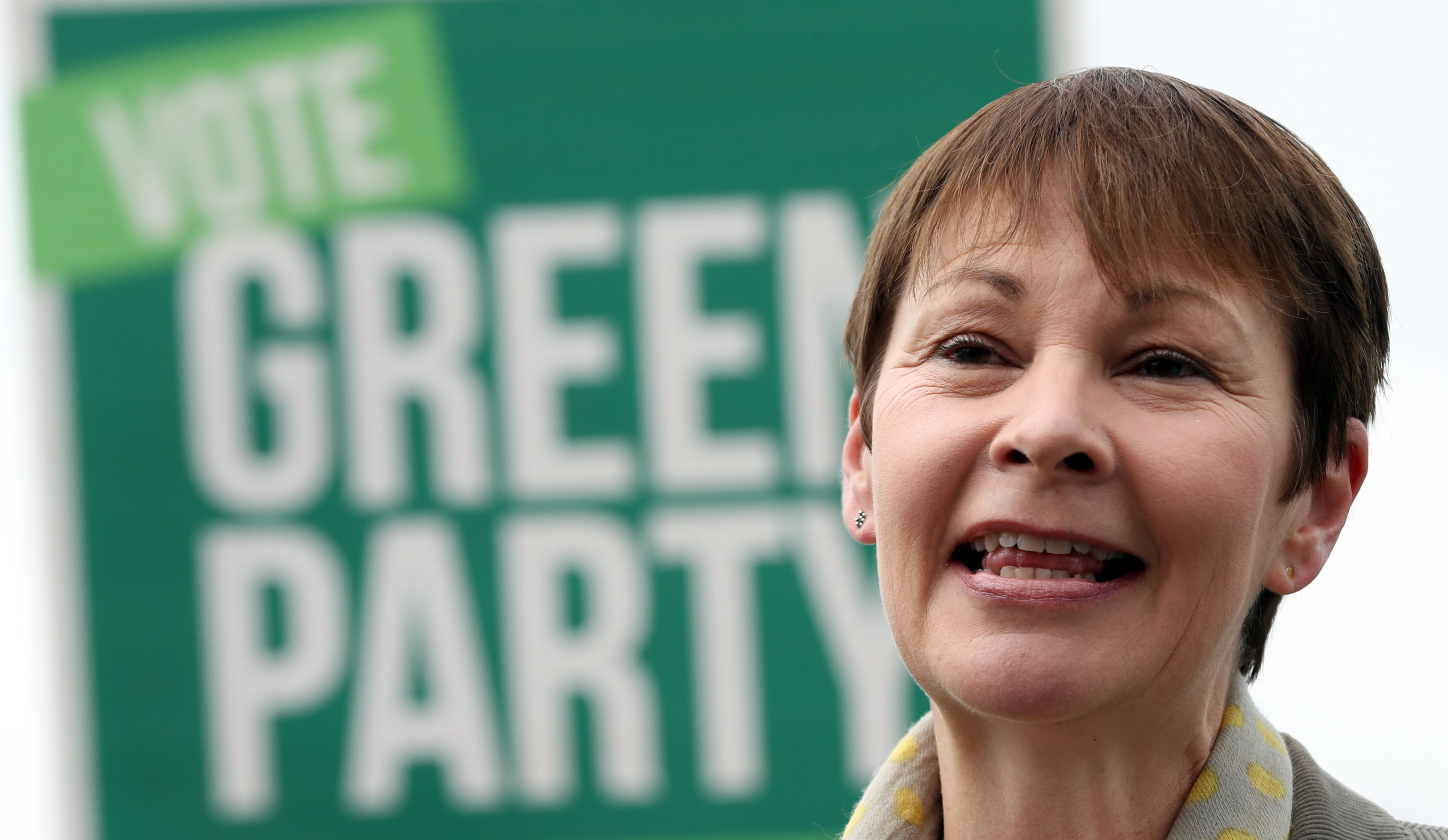
Green Party (Caroline Lucas)

One of the biggest obstacles to parliamentary representation for minor parties is the majoritarian first-past-the-post electoral system which favours the major organisations.
A key example of this is the Green Party. Despite their peak electoral performance of over one million votes in 2015, they only won one seat; 3.8% of the vote for 0.15% of seats. The UK’s Green Party has thus arguably fared worse than international iterations such as in Germany and the United States.
That one seat belongs to Caroline Lucas who serves the Brighton Pavilion constituency. Elected in 2010, in her first year she was The Spectator’s Newcomer of the Year in their Parliamentarian of the Year awards and was re-elected in 2015, 2017, and 2019. In the latter, she won 57% of the vote, 20,000 more than the Labour candidate, her closest competition.
Despite the name, the party does not have a single-issue agenda, with Lucas fighting for greater economic regulation and social progressivism.
Although Lucas has announced she will step down at the next election, the party has announced it is hopeful it can pick up four seats the next time around, citing the party’s historic success in the 2023 local elections.
Respect Party (George Galloway)

In 2003, George Galloway was expelled from the Labour Party, ruled to have brought the party into disrepute. In 2005, Galloway had sought retribution, standing as a candidate for the new Respect Party in Labour stronghold Bethnal Green.
Exploiting the alienation of many over the Labour-led invasion of Iraq of which the Scottish socialist had been an ardent critic, Galloway was successful, unseating Blair loyalist Oona King. Seeing a 26.2% swing, Galloway remarked: “All the people you’ve killed, all the lies you’ve told have come back to haunt you…it was a defeat for Tony Blair and New Labour and all of the betrayals.”
Despite coming in second in East Ham, West Ham, Birmingham Sparkbrook and Small Heath, it would be the only seat won by the Respect party.
He would lose the seat at the next election, having made a memorable appearance on Celebrity Big Brother during his tenure.
In 2012, Galloway would return to parliament for the same party, winning the Bradford West by-election. Earning his personal highest vote count at over 18,000, he would win over 50% of the vote in what he called “the most sensational result in British by-election history.”
Respect was dissolved in 2016.
Referendum Party (George Gardiner)

In the 1990s, the signing of the Maastricht Treaty established a mainstream Euroscepticism within the Conservative Party as right-wing rebels opposed further European integration.
In 1997, one outspoken Tory rebel, Sir George Gardiner, was deselected by his local association by 291 votes to 226, subsequently defecting to the little-known and short-lived Referendum Party.
A devout Thatcherite, Gardiner was instrumental in getting her elected to the party leadership as a part of the so-called “Gang of Four” (prior to the same nickname being given to the founding members of the SDP). When she was kicked to the curb, he became a critic of John Major.
Two weeks before the election, he joined the Referendum Party, a single-issue party bankrolled by Sir James Goldsmith that campaigned for a referendum on EU membership. Gardiner predicted Tory seats would “go down the pan with an almighty flash when the election comes.”
In the ensuing election. Gardiner came 4th with just 7% of the vote; the seat was won by Conservative Crispin Blunt.
Despite the Referendum Party dishing out more on press advertising than the Tories or Labour – allegedly spending £20 million – and standing an unprecedented seat count for a minor party at 547, they made no gains.
Chartism (Feargus O’Connor)

You may know the Chartist movement petitioned Parliament on three occasions, requesting their Six Points to improve the democratic process in the United Kingdom. Less well-known is that the guild had parliamentary representation from 1847-1852.
Described by historian and author Dorothy Thompson as “the acknowledged leader of the movement,” Feargus O’Connor was elected in 1847 in one of two seats for Nottingham. O’Connor was the publisher of the Northern Star newsletter, which had a peak readership of as many as 50,000 in 1839.
It was not his first stint as an MP. He had previously been an Irish Repeal candidate, later being disqualified from taking his seat for not meeting the qualifications in regards to property owned.
The radical reformer was sitting during the third and final Chartism petition in 1848. Despite claims it had 5.5 million signatures, the fraudulent names signed and the 221-17 loss in the Commons chamber tolled Chartism’s downturn.
The years were not a career-high for O’Connor, who turned to alcohol and allegedly suffered from syphilitic paresis. After physically assaulting three MPs, he was deemed insane and sent to an asylum.
Nonetheless, the Chartist movement has been seen as an influence on the creation on both the Liberal and Labour parties.
GRIFFIN KAYE.
Leave a Reply