The ‘Dark Horse’, one the biggest wild cards in all of politics (outside of the October Surprise in the U.S. presidential elections).
If you’re unfamiliar with the term, a dark horse is the term often used to describe an unknown person who ends up coming out of nowhere and is often seen as a viable contender who could shake things up in a race for politic office.
Throughout it’s history, the United States has seen many dark horse candidates both on the state and local level and while some were successful in achieving their goals, others weren’t so lucky and in this article I’ll be going the History of Dark Horse Candidates in U.S. Presidential Elections.
America’s First Dark Horse Candidate

Our story begins in mid 1840’s America, the two major political parties: The Whigs and The Democrats are faced with a major issue on whether the United States should annex the state of Texas into the Union…Some like presidents John Tyler and Andrew Jackson believed that America should aquire the ‘Lone Star State’ while others believe they shouldn’t as it would not only lead to war with Mexico but it would bring more attention to issue of slavery, something many politicians have been trying to downplay for many years.
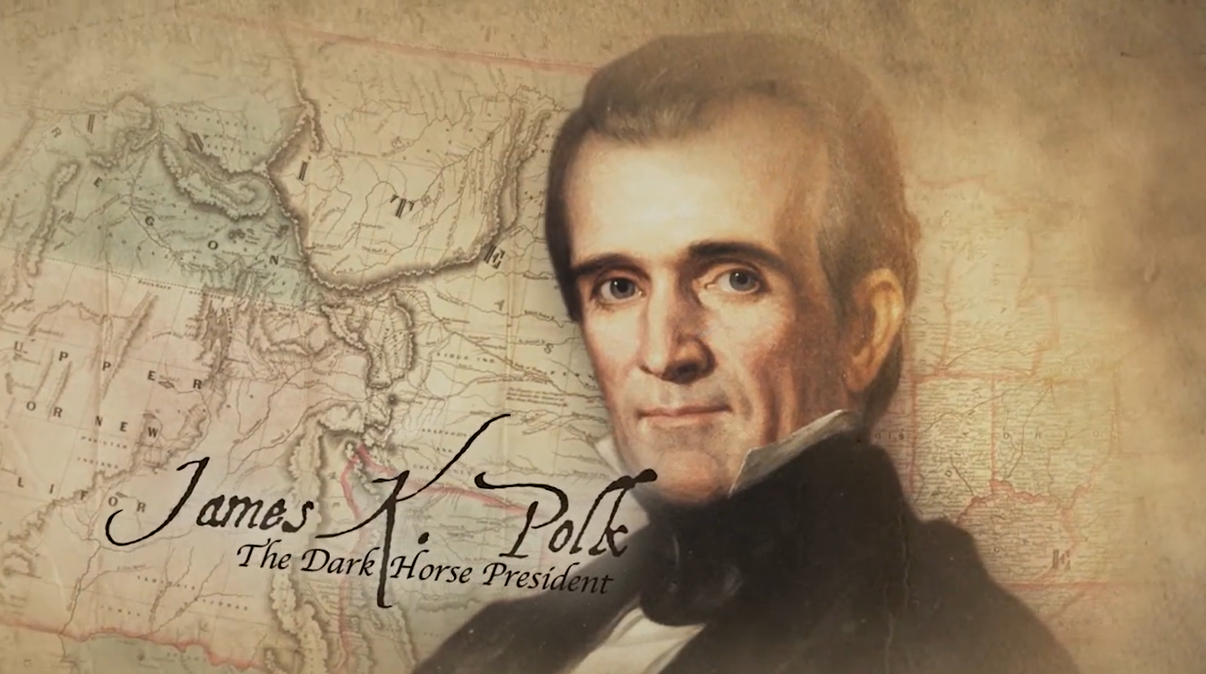
At the 1844 presidential election, the Democrats were split on who should be their candidate for president (not the last time you’ll be hearing that in the article). After names like James Buchanan, Martin Van Buren and Lewis Cass failed to get the votes needed to win the nomination some in the party suggested James Knox Polk, a little known former Tennessee Governor and Speaker of the House.
Thanks to his friendship with Andrew Jackson and his support of ‘Manifest Destiny’ (aka annexing territories into the U.S. to expand the countries power), Polk became the Democratic nominee and the very first recorded ‘Dark Horse Candidate’ to run for president…Long story short, Polk would carry 15 states to Whig Party candidate, Henry Clay’s 11 states and became the 11th President of the United States.
By the end of Polk’s single term in office, he would expand the United States’ influence but also bring it closer to a civil war.
A Northern Man With Southern Principles

Two presidential elections later and the Democrats once again are unsure who will be at the head of the ticket for the general election in 1852; Enter Franklin Pierce, the former Senator and U.S. Representative from New Hampshire who much like Polk in 1844 was a young, lesser known politician who favor the southern wing of the Democratic Party despite Pierce being a northerner.
By this time, the United States was showing signs of division over the issue of slavery and both parties are hoping to elect someone who could quell the simmer tensions between the northerners and southerners.
Due to Pierce being out of politics for many years and being seen as a person who could appeal to many Southerners with his policies, led to future Vice President, William R. King calling Pierce a “Northern Man With Southern Principles” and this helped him win the nomination.
Pierce wiped the floor with famed Military General and Whig Party presidential candidate, Winfield Scott in a landslide victory carrying 27 out of 31 states and getting nearly 51% of the popular vote.
The Prarie Lawyer Turned President

Fast forward to 1860 where the Democrats were you guessed it…struggling to find a candidate for president; While the divide within the Democratic Party was so bad it paved the way for a Northerner (Stephen Douglas) and a Southerner (John C. Breckinridge) to run on two different tickets, the dark horse in this story comes from the opposition: The Republican Party.
Abraham Lincoln, who is recongized as one of America’s most important presidents ran for the top job in 1860 after beating a crowded field of republicans to secure his nomination after many believed his time as a rising star was over after losing a series of well documented debates against Stephen Douglas for the position of Illinois Senator.
In a four way race for the presidency, Lincoln emerged victorious carrying 18 states (all from the West and Northern half of the country) even though his popular vote total of 39.8% was less than what most presidential candidates get when they win a election.
Lincoln would run for re-election again in 1864 and win, making him the first dark horse candidate to have won two terms as president even though he never got to finish it after being assassinated at age 56 by John Wilkies Booth on April 14th 1865.
1876: The Battle of the Dark Horses

Sixteen years after Lincoln’s victory and eleven years after the end of the American Civil War, another presidential election was around the corner but this one would be the first of several times that the two major candidates were both dark horses.
The Republicans went with Civil War General and Governor of Ohio, Rutherford B. Hayes mainly for his anti-corruption stances which was important as the presidency of Ulyssess S. Grant was riddled with scandals; For the Democrats, they also chose an anti-corruption fighter but this one was the Governor of New York, Samuel J. Tilden and many believed for a variety of reasons that Tilden would be the guy to get the Democrats back into the White House.
Without going into too much detail, the 1876 election became the closest and most controversial race in American history with outcome seeing Rutherford Hayes become the 19th president by just one electoral vote despite Governor Tilden winning the majority of the popular vote with Hayes getting roughly 48% to Tilden’s roughly 51%.
Hayes had promised to serve a single term as president and while his time in office isn’t while remembered today, it is notably for the end of the Reconstruction Era in the U.S. as well as getting the ball rolling on civil service reform.
1880: The Battle of the Dark Horse Part 2

Much in the same way the Democrats were divided on who to pick as a candidate in 1852 over the issue of slavery, the Republicans were having a hard time picking someone for the 1880 election as two warring factions emerged in the Stalwarts (politicians who supported giving positions to friends and allies) and the Half Breeds (politicians who believed positions should be given on merits and not for special favors).
Similar to the previous election, both parties ended up choosing two unlikely and little known people as their candidates with Major General Winfield Scott Hancock representing the Democrats and James Abraham Garfield, a Civil War veteran, Preacher and Representative from Ohio representing the Republicans.
Although Garfield was reluctant to run for president and Hancock wasn’t politician, both men were looking to continue Hayes’ efforts of civil service reform but the Republicans were able to hold the mantle of being anti-corruption more than the Democrats despite a section of that party being filled with corrupt insiders and businessman.
With the help of having a member of the Stalwart faction on the ticket as Garfield’s running mate, the lesser known Garfield won both the state of New York not to mention a very close election to become the 20th U.S. President…though his presidency wouldn’t last long due to an assassination attempt and malpractice by his doctors.
1920: Battle of the Dark Horses Part 3

Our third and final battle pitting two dark horse candidates against each other comes 40 years after the last one with Democrats and Republicans unsure who would represent them in the 1920 election.
The state of Ohio really got some representation in 1920 as not one but two of their politicians became presidential candidates that year; Governor James Cox and Senator Warren Harding both seemed unlikely contenders for the presidency but the post war chaos that engulfed the United States cleared the path for Americans wanting a fresh start after War World One.
With the Republicans having a well funded political machine as well as using the classic strategy of the ‘Front Porch Campaign’ Harding was able to draw in huge waves of people to his home state and capitivate them with his calls for a “Return to Normalcy”.
Despite taking numerous whistle stop tours and having future president Franklin D. Roosevelt as his running mate, Governor Cox wasn’t able to sway the masses like Senator Harding and it showed by election day with Harding carrying 37 out of 48 states and winning over 60% of the popular vote.
Harry Truman: The Dark Horse President

We jump almost 30 years later with our next example and it’s quite an interesting one as the dark horse in question is actually the President of the United States.
While it might be strange to believe the commander-in-chief could ever be a dark horse candidate in an election, you have to remember that Harry Truman wasn’t well known on the world stage. After the death of Franklin Roosevelt in 1945, Truman became the new leader and almost from the start of his presidency right into the election of 1948, everyone even his own party didn’t think Truman had what it took to win.
Aside from a battered post war world two economy, Truman took on three other challengers in 1948 as well an apocryphal belief that Thomas E. Dewey (the Republican presidential candidate in ’48) would become the new president.
Though you could argue Truman was more of an underdog than a dark horse, the fact is many Americans didn’t know much about Truman before the whistle tours but afterwards the people knew him and by the time the election ended it was Truman who escaped victorious as he carried 28 states to and got more than enough electoral votes to get re-elected.
The Peanut Farmer Turned President

By the mid 1970’s, many establishment types within the democratic party looked determined to win the nomination, but the outbreak of the Watergate Scandal along with Richard Nixon’s resignation and later pardoning by Gerald Ford made it hard for them to appeal to the voters.
In the end, they were all outshined by little known peanut farmer and one term Governor from Georgia named Jimmy Carter, who ran on the idea of being honest and transparent with the people following his successes in the Iowa caucus and numerous primaries.
Carter would go on to win his party’s nomination and then went on to narrowly defeat President Ford to become the 39th president and the only Democrat elected to the high office between 1969-1993.
Soon after this election, the term ‘dark horse’ wouldn’t be used to described lesser known presidential candidates, but even without the label some were still able to win the presidency with the next candidate coming 32 years later.
Yes We Can!!!

It might be hard to believe that former Senator of Illinois and later President Barack Obama was a lesser known presence in politics, but back in the 2000’s not too many people knew who Obama was and made it all the more interesting when he decided to run for the Democratic Party’s nomination against more seasoned competitors like John Edwards, Joe Biden and Hillary Clinton who had a tight race with Obama to be the nominee.
After a year in a half of battling, Obama defeated Clinton to become the first African American to be nominated by a major political party for the presidency; Although Arizona Senator, John McCain tried to make the case for why he should be the next president, the problematic second term of George W. Bush, his pick for running mate and the outpouring of young, minority voters coming out to support Obama sealed his fate.
By the end, Obama won with 365 electoral votes to McCain’s 173 and carried roughly 53% of the popular vote. In 2012, Obama would win re-election making him the first ‘lesser known candidate’ since Abraham Lincoln to win re-election after being previously elected to a term as president.
Hillary Clinton would go on to serve under the Obama Adminsration as the Secretary of State before running and winning the Democratic Party’s presidential nomination in 2016, unfortunately she took on another dark horse candidate but this time on the side of the Republicans.
The Celebrity Dark Horse

While all of the previous entries had some kind of political experience before ascending to the White House, our final example didn’t have any of that as reality TV star and businessman, Donald J. Trump entered the 2016 presidential race as the most unlikelist person to win the Republican Party’s nomination never mind win the presidency.
Despite both political parties and the news media refusing to take Trump’s candidacy in any serious way, the host of ‘The Apprentice’ steamrolled the primaries and caucuses before lobbying insults on his conservative opponents and winning the Republican Party’s nomination for president.
Trump would take on Hillary Clinton for the presidency and the media once again laughed at Trump’s chances of winning, but due to Clinton’s long and controversial record in politics plus the scandal regarding her emails and the fact Trump was running a protectionist themed campaign with a bit of populism sprinked in, it became a major shock when Trump defeated Clinton to become 45th President of the United States despite losing the popular vote.
The Failed Presidential Candidates

All of the entries on this list have been about those dark horse candidates who ran and won the presidency but for our final chapter, let’s briefly go over those dark horse candidates who failed to win the highest office in the land.
- Horatio Seymour: Former Governor of New York and reluctant Democratic nominee for president who lost to Union General, Ulysses S. Grant in 1868.
- Horace Greeley: Famous Newspaper editior and former U.S. Representative of New York ran with the Liberal Republican Party in 1872 but lost to President Grant in a landslide before dying around the same time the electoral votes were being counted.
- William Jennings Bryan: Former U.S. Representative and Lawyer from Nebraska who became the youngest person to be nominated for president at 36 years old and lost the first on many elections in 1896 in an electoral landslide.
- John W. Davis: Former lawyer, Ambassador to the U.K, and U.S. Representative of West Virginia was selected to break up a deadlock within the 1924 Democratic Convention but lost in a landslide to President Calvin Coolidge.
- Wendell Willkie: A businessman and former lawyer from Indiana, who became the 1940 Republican candidate for president after the other candidates failed to win enough delegates, but he still lost to FDR in a landslide and died not long after failing to win the party’s nomination in 1944.
- Barry Goldwater: A conservative Senator from Arizona who shocked many by becoming the Republican Party’s nominee in 1964 after a strong grassroots movement convinced him to run, but lost to President Johnson in a landslide election.
- Bernie Sanders: Although he never won the Democratic Party’s nomination for president in 2016 or 2020, his out of nowhere run for the nomination coupled with his strong showing in the primaries against Hillary Clinton and Joe Biden gets him a mention on here.
If you like this kind of content, be sure to leave your thoughts down below in the comment section and be sure to follow me also on X @hakeemfullerton and I’ll see you in the next article.
Leave a Reply