Hello and welcome back to another edition of Lace ‘Em Up’s Presidential Election series for today we will be going over the Election of 1828. Andrew Jackson is looking to win the presidency he believed was stolen from him four years ago and what ensues is one of the nastiest elections in American history.
The Corrupt Bargain

As previously mentioned in the election of 1824 article, the House of Representatives ended up choosing the winner after none of the candidates were able to get enough electoral votes to win. This led to John Quincy Adams being declared the new President despite the fact Andrew Jackson having the most electoral and popular votes compared to his rivals.
Some believed that a “Corrupt Bargain” was reached between Clay and Adams as Clay (the Speaker of the House) could make the case for Adams to become the next president to the representatives and in return, Adams would make Clay the new Secretary of State.
The results from the House vote angered many including Andrew Jackson, who immediately got the nomination for president once again thanks to the endorsement of the Tennessee legislature. However Jackson wasn’t the nominee for the Democratic-Republicans as the party met it’s demise not long after the previous election and thus a new party was needed for Jackson come 1828.
The Birth of the Democratic Party

Jackson’s legion of supporters as well as several politicians and politically minded strategists like New York’s own Martin Van Buren soon transformed itself into a new political party that we know today as The Democrats. This party, under the leadership of Andrew Jackson and co-founder Van Buren was a well-crafted reactionary response to the privileged elites that they believed were corrupting the country by using their power to suppress the middle class.
Supporters of the Democrats tended to be middle-class white men who were enthralled by Jackson’s fight against the rich but also the party’s beliefs in abolishing centralized banking, limiting government, favouring states rights and supporting slavery.
By the 1826 midterm elections, ‘Jacksonian Democracy’ was beginning to sweep into Congress and the Democrats made it their goal to oppose every bit of legislation that the Adams administration was trying to pass with the aim of hurting the President’s chances at re-election.
John Quincy Adams’ Presidency

Speaking of John Quincy Adams, his time as President has seen him sign legislation that protected Native Americans to increasing free trade with other nations to pushing through various infrastructure projects that would lead to the creation of what would be the Erie Canal, the Baltimore and Ohio Railroad System and the Cumberland Road.
Adams also planned to use “The American System”, which was an economic plan created by Henry Clay that would allow the U.S. economy to grow through protective tariffs, a centralized national bank and expanding trade.
Unfortunately for Adams, much of those hopes were squashed once the Democrats entered Congress in 1826 and things certainly aren’t helped when Adams signs into law ‘The Tariff of 1828’ or the “Tariff of Abomination” as some opponents called it. This tariff would raise rates in such a way that it would devastate Southern states who rely on agriculture while also benefitting North Eastern states who support free trade and manufacturing.
Due to this decision, Vice President John Calhoun resigns from his position and decides to run as Andrew Jackson’s running mate in the next election; Adams would unanimously be nominated for president by the newly created National Republican Party and he chooses his Secretary of the Treasury, Richard Rush as his new running mate.
Dirty Campaigning

With Jackson determined to win the White House and President Adams being blocked at every turn by the Jacksonians, things begin to turn ugly. Both sides are using the power of printed media to spread rumours about each other with almost no stone being unturned.
In Andrew Jackson’s case, he is being criticized for killing people in duels, his decision to execute soldiers who had abandoned their post on the battlefield as well as targeting Jackson’s illiteracy and spreading rumours of cannibalism in a number of pamphlets called ‘The Coffin Handbills’.
Jackson’s relationship with his wife Rachel was also vilified in the newspapers as Rachel was in a relationship with the former military general despite her divorce from her previous marriage not being finalized yet. This made many refer to Andrew and Rachel as ‘Adulterers’ at a time when something like that was frowned upon in America.
When it came to John Quincy Adams, he was slandered by pro-Jackson newspapers with stories about how feeble he looked whilst digging out a tree root during a ceremonial event. There were also rumours that he gave a young woman away to the Czar of Russia during his time as Minister which basically meant they were referring to the President as a pimp.
Adams is also getting accused of using taxpayer dollars to buy gambling devices, but in actuality his using his own money to buy what turned out to be a chess set and billiard table to play during his free time…Overall, it’s a war of words and accusations between Jackson and Adams with only one of them coming out of this as president.
The Election of 1828: The Results & Aftermath

Similar to the previous election, you need 131 electoral votes to win the presidency, but things are different this time around with the voter turnout increasing as poor to middle class white men were able to vote.
When it’s all said and done, Andrew Jackson emerged victorious as the Seventh President of the United States. Jackson received 178 electoral votes and 56% of the popular vote while John Quincy Adams got 83 electoral votes and 44% of the popular vote. John Quincy (much like his father), became the only father and son duo to become president only to lose re-election.
John Calhoun remained the Vice President, making him the second VP since George Clinton to remain in office, but under two different administrations.
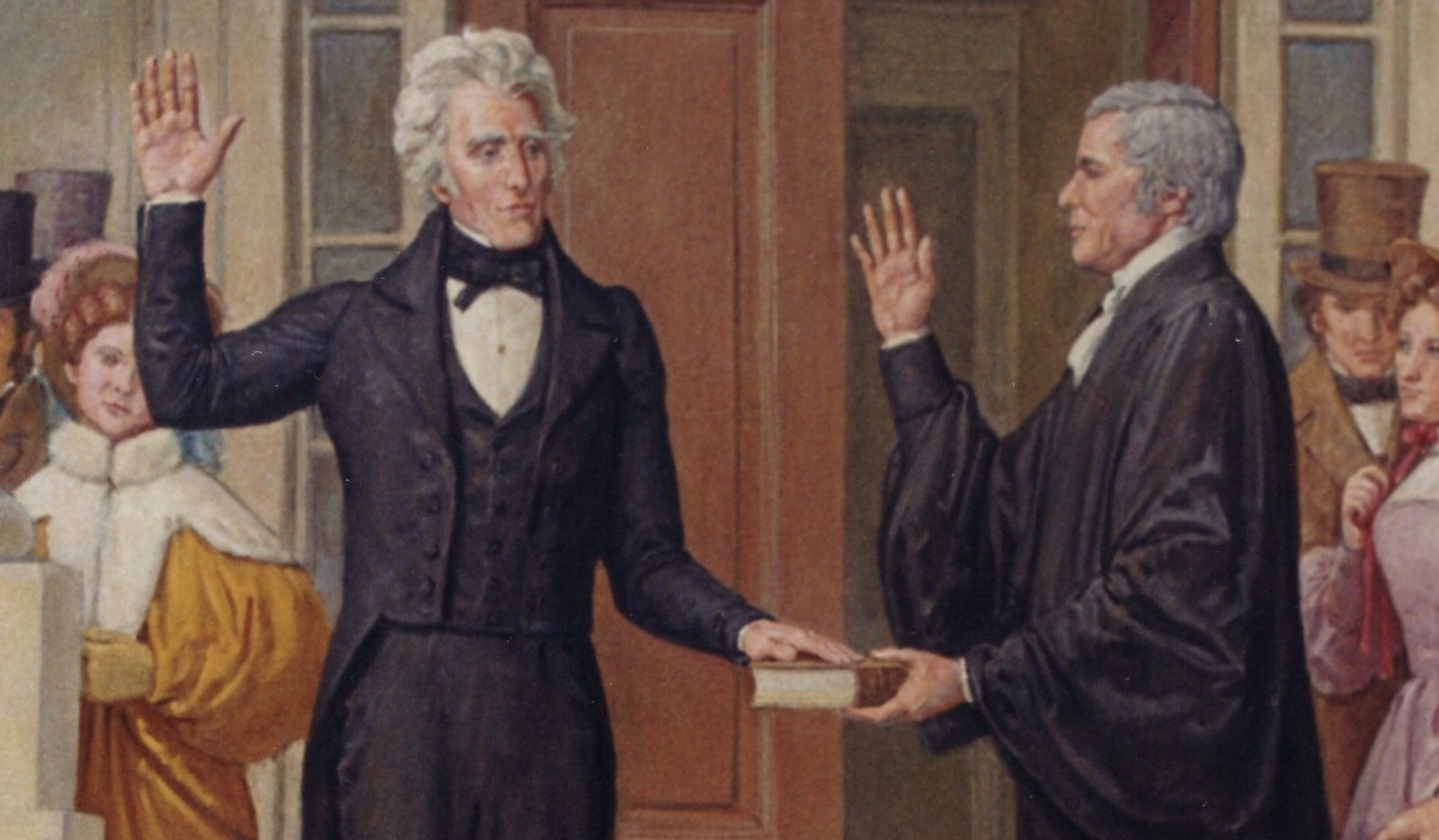
While Andrew Jackson was sworn in as the new President in March of 1829, he would be doing it as a widower as his wife Rachel had died in December the previous year due to chest pains that resulted in her death, leading Jackson to accuse both Adams and Henry Clay for indirectly causing her death.
John Quincy Adams refused to attend Jackson’s inauguration, however Adams and his staff would soon vacate the White House following Jackson’s swearing-in ceremony when a group of energetic folks entered the White House and caused so much chaos that Adams and his team had to escape out the back door .
This election is credited with ushering in the ‘Second Party System’ as two new political parties would emerge in the years to come.
Make sure to follow Lace ‘Em Up on X @laceemupoffice and on Bluesky Social @laceemupmedia.bsky.social. You can follow me on X @hakeemfullerton and Bluesky Social @hakeem96.bsky.social for wrestling related articles like this and I’ll see you next time.
Leave a Reply