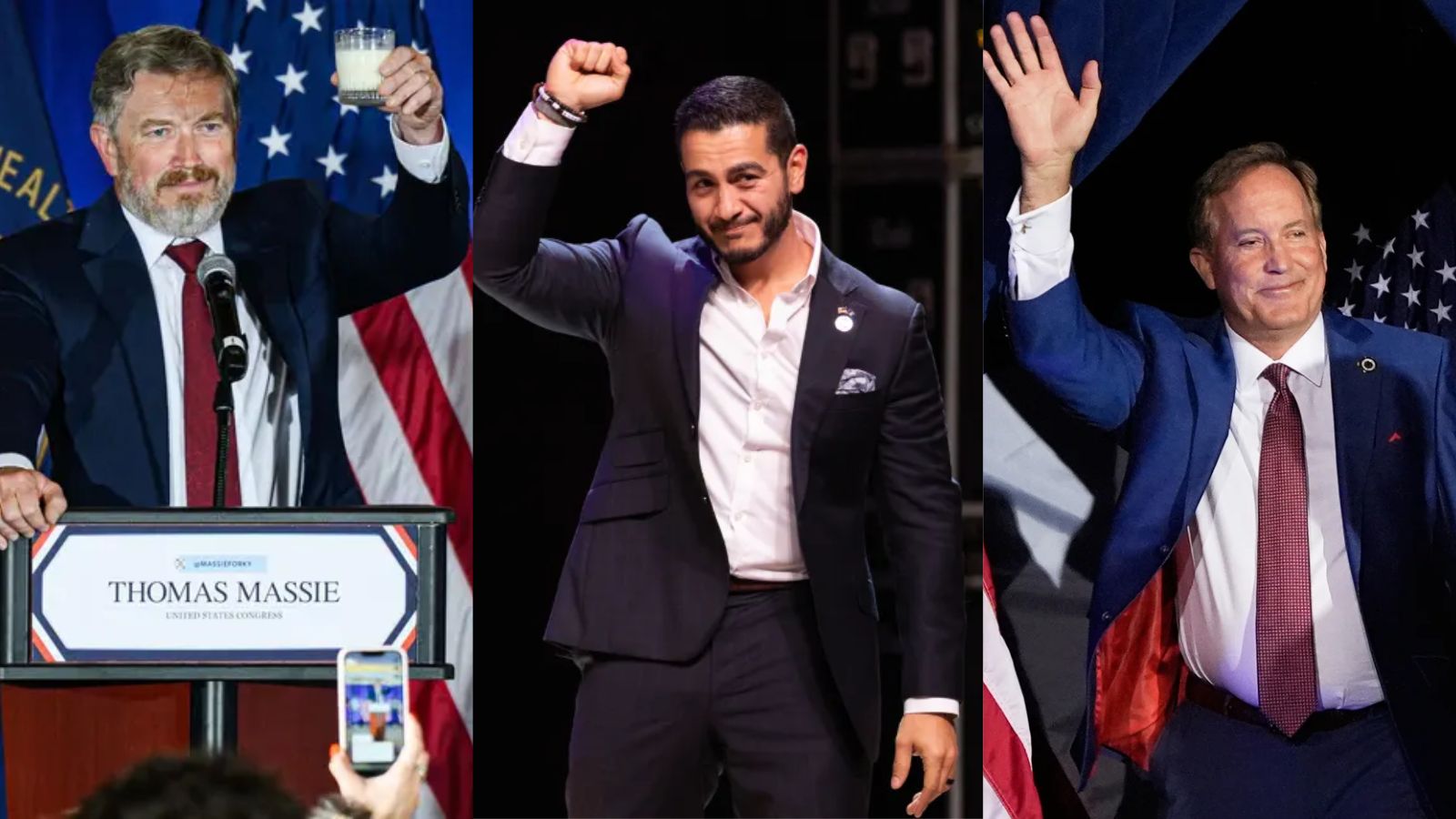
The 2026 Midterms primaries are shaping up to be defining races for both parties. A battle to determine control of the House and Senate which could neuter the abilities of President Trump. Serving as a referendum on a deeply unpopular president and one that many pundits thought could shape the ideologically foggy Democratic Party.
So, as we head towards the end of the cycle, what are some key notes from an often eye-catching Midterm primary season.
Progressives Have Shaken Up Democratic Primaries…

According to CBS News analysis from mid-August, two-thirds of House candidates endorsed by either the Democratic Socialists of America (DSA) or Justice Democrats won their primaries.
In largely blue states like New York and Colorado, incumbents have been ousted by progressives, often much younger than their long-tenured counterparts.
The most significant victory so far was in Michigan, where progressive Abdul El-Sayed – a local health official and previous gubernatorial candidate – defeated the more centrist House Representative Haley Stevens. Running on an unashamedly left-wing platform, El-Sayed ran in a purple state whose race is seen as a must-win for Democrats. As such, moderates like incumbent Senator Gary Peters, Governor Gretchen Whitmer, and Senate leader Chuck Schumer endorsed Stevens.
Another state the party must win is Maine, where Democrats overwhelmingly voted for scandal-plagued progressive oyster farmer Graham Platner over Governor Janet Mills, winning over 70%.
In Florida, a socialist won their first statewide race of the cycle with Angie Nixon defeating Trump impeachment witness Alex Vindman in a major upset.
In Democratic stronghold state Massachusetts, the race between incumbent Ed Markey and challenger Seth Moulton has seen both present themselves as the race’s true progressive. While Markey highlights his support for Medicare for all and transgender rights, Moulton emphasises his support for abolishing ICE and the urgency for new leadership in Washington.
As former Secretary of Labor and social activist Robert Reich wrote for The Guardian: “They’re voting for progressive Democrats not because they want socialism, support the Democratic Socialists of America, or reject candidates called “moderate”.
They’re voting for candidates whom they believe will fight to make housing, food, healthcare and childcare affordable to average working families. And who’ll take on Trump’s billionaire backers, CEOs and Wall Street titans who are rigging the economy against them.”
…But Progressives Are Underperforming?

Although they have racked up wins, progressives have fallen short of expectations in some high-profile races.
Cori Bush, who fought to regain her seat in Missouri’s 1st district after she was primaried in 2024 by AIPAC-supported Wesley Bell. Bell, who won 51%-46% in 2024 increased his vote share this primary cycle to nearly 60% to the former Squad member’s 37%. Bell could boast endorsements from Whip Katy Clark, House leader Hakeem Jeffries, and former leader Nancy Pelosi.
Elsewhere, in red state Florida, pro-Israel incumbent Jared Moskowitz turned away a challenge from Oliver Larkin despite Larkin raising more money, attracting notable media attention, and Moskowitz’s unpopular support for the genocide in Gaza.
Al Green, a chief Israel critic and enemy of the President, lost his seat to fellow incumbent Christian Menefee amid Republican efforts to redistrict the state
In Wisconsin, a closely-watched Governor race saw progressive Francesca Hong defeated by David Crowley, a once-dropped out candidate who returned and won with the aid of outgoing Governor Tony Evans.
Moreover, despite his triumph in Michigan, El-Sayed only defeated Haley Stevens by under 14,000 votes of the 1.5 million votes cast. Talking of which…
Highly Unreliable Polling

El-Sayed’s margin of victory was far less than had been predicted in the weeks prior. Polling as much as a 15-point lead over Stevens during the campaign, polls in late July ahead of the love showed a 10+ point lead still. However, in the race, he only emerged victorious by the whisker of an eyebrow, winning by 0.9%.
Moreover, Kalshi odds had Francesca Hong with a 95% chance of winning the Wisconsin Gubernatorial election. Eventual winner David Crowley did not win in any polls and on average showed Hong with a 25% lead. In the end, Crowley triumphed by some 4,000 votes out of nearly 800,000 votes.
The New York Times noted: “The disparity between polls and results in Wisconsin and Michigan prompted Frank Luntz, a Republican pollster and consultant, to jokingly call for “a total and complete shutdown of primary polling in the Midwestern United States until we can figure out what the hell is going on” in an early morning X post on Wednesday.”
Similarly, Kalshi put Thomas Massie’s odds of winning at 78% less than two weeks before polling day in a race he lost by nearly 10%.
While it is hard to work out why polling has been so incorrect thus far, it just proves that every race is unpredictable and is not determined until the last ballot is cast.
Kamala Harris: No Longer the Democrats’s Leader?

One figure notably absent from mainstream campaigning was Kamala Harris.
Since the election, she has embarked on a book tour and occasionally put out statements but largely remained quiet and away from the forefront of Democratic leadership roles.
According to Ballotpedia, Harris has only endorsed five Congressional candidates this race. Among them is Jasmine Crockett for Texas, who would lose her primary race.
In the most notable sign Harris is a potential anchor on candidates, Mary Peltola, the Democrats’s candidate for Senate in Alaska, rejected a fundraising effort from the 2024 nominee.
Aside from Harris, Democrats leading the charge on the campaign trail include progressives like Bernie Sanders and Alexandra Ocasio-Cortez who have campaigned successfully for winners in Maine, Minnesota, and Michigan. In gubernatorial elections, Andy Beshear, the popular Democratic Governor of deep-red Kentucky and chair of the Democratic Governor’s Association, has been campaigning across the South and Midwest in states Democrats have been locked out of for decades.
Plus there are local candidates like New York City Mayor Zohran Mamdani, who successfully backed three left-wing candidates against incumbent pro-Israel centrists.
While the crowd for 2028 seems very much open, at this early stage, it seems Kamala Harris is not a lingering presence over the party.
Trump Has A Long Memory

Candidates vying for Trump’s endorsement know they must have been loyal to him and his agenda and now many statements and actions from years gone by have haunted Republican incumbents.
For the first time since 2012, a senator has been primaried, with Trump helping to eliminate two non-MAGA Republicans in favour of more ideological loyalists.
In the case of Louisiana Senator Bill Cassidy, the doctor did reluctantly help approve anti-vaccine advocate Robert Kennedy to the role of Health and Human Services Secretary. Despite this, Trump endorsed a challenger to Cassidy, not able to look past his vote to impeach Trump after January 6th, his calls for Trump to drop out of the Republican primary after his indictments, and his lack of support for his presidential campaign.
Moreover, comments from 2023 in which Texas Senator John Cornyn said Trump’s “time had passed him by” and that he could not win the 2024 election came back to bite him. Trump stated Cornyn had been disloyal to him during rough patches of his career and instead endorsed his primary opponent Ken Paxton.
A Trump Endorsement is Still Important…

The two Senators above both saw their careers ended after Trump supported primary opponents against them for disloyalty to him over the years.
Cassidy became the first elected Senator since 1946 to lose a primary by placing worse than second, falling to third. Endorsements by Senate colleagues Majority Leader John Thune, Majority Whip John Barrasso, and Republican Senatorial Committee Chairman Tim Scott failed to save the jeopardised Cassidy. He won just 24.8% of the vote, beaten by state treasurer John Fleming and House Rep. Julia Letlow. Letlow, backed by Governor Jeff Landry and Trump, emerged victorious.
Moreover, John Cornyn narrowly won his primary race but did not cross the 50% threshold against opponent, Texas Attorney General Ken Paxton. Paxton highlighted his loyalty to Trump and Cornyn’s more liberal positions, able to clinch Trump’s endorsement to win the race winning 64%-36%.
In another closely-watched race, Trump managed to boot out his most prominent Republican critic Thomas Massie, sending Defense Secretary Pete Hegseth campaigning against him. Massie, who had broken rank with the president over his deficit-driving flagship budget bill, the White House’s handling of the Epstein files, and the administration’s unwavering support for Israel, was defeated by the virtual unknown Ed Gallrein.
Furthermore, in Texas, moderate Representative Dan Crenshaw – the only Texas Republican Representative not endorsed by Trump – lost to loyalist Steve Toth.
…But His Endorsement is No Certainty of Victory

Despite being seen as the kingmaker for Republican candidates, his streak of success so far has perhaps proved his influence and popularity are waning.
CNN analysis in mid-August revealed that 10 candidates for statewide office endorsed by Trump were defeated, equal to the number of candidates who lost in 2018, 2022, and 2024 combined!
One particularly bad night were the primaries on August 18th, where just 28% of Republican voters backed Trump-endorsed candidates. For example, two Trump-backed candidates lost in their House bids. Catalina Lauf came second in a crowded Republican primary featuring several notable hopefuls while incumbent Cory Mills lost amid an ethics investigation into him over alleged sexual impropriety.
The same day, Trump-backed Wyoming gubernatorial candidate Megan Degenfelder – also supported by the state’s only Representative Harriet Hageman – lost to the more liberal Eric Barlow. The loss is particularly notable as Wyoming is the most Republican state in the country and Trump won there by over 45% in 2024 yet his choice of a nominee failed as voters chose a lowkey conservative over a far-right firebrand.
The Wyoming gubernatorial loss is the latest in a line of failed Trump candidates for governor.
In Minnesota, MyPillow founder and election denier Mike Lindell lost his primary by double digits to Minnesota House Speaker Lisa Demuth. Georgia continued its common rebel streak against Trump loyalists when Burt Jones was defeated by Rick Jackson, who was endorsed by Senators Ted Cruz and Rick Scott. In Iowa, Trump-endorsed Randy Feenstra lost to Zach Lahn – backed by Turning Point USA’s political action committee – by just over 1,600 votes in a state Democrats seem increasingly likely to win for the first time in two decades.
In a bizarre result, Amir Hassan was backed by Trump and a number of incumbent Republican Representatives but still suffered a landslide loss to retired engineer Thomas Smith. Despite winning by 17 points, Smith had little-to-no named support, suspended his campaign, and had already endorsed another candidate. Many online theorised that Republican voters saw the name Amir Hassan and instead opted for the more Anglophone-sounding Thomas Smith.
Steadfast Loyalty to Trump Remains (Even After Being Defeated)
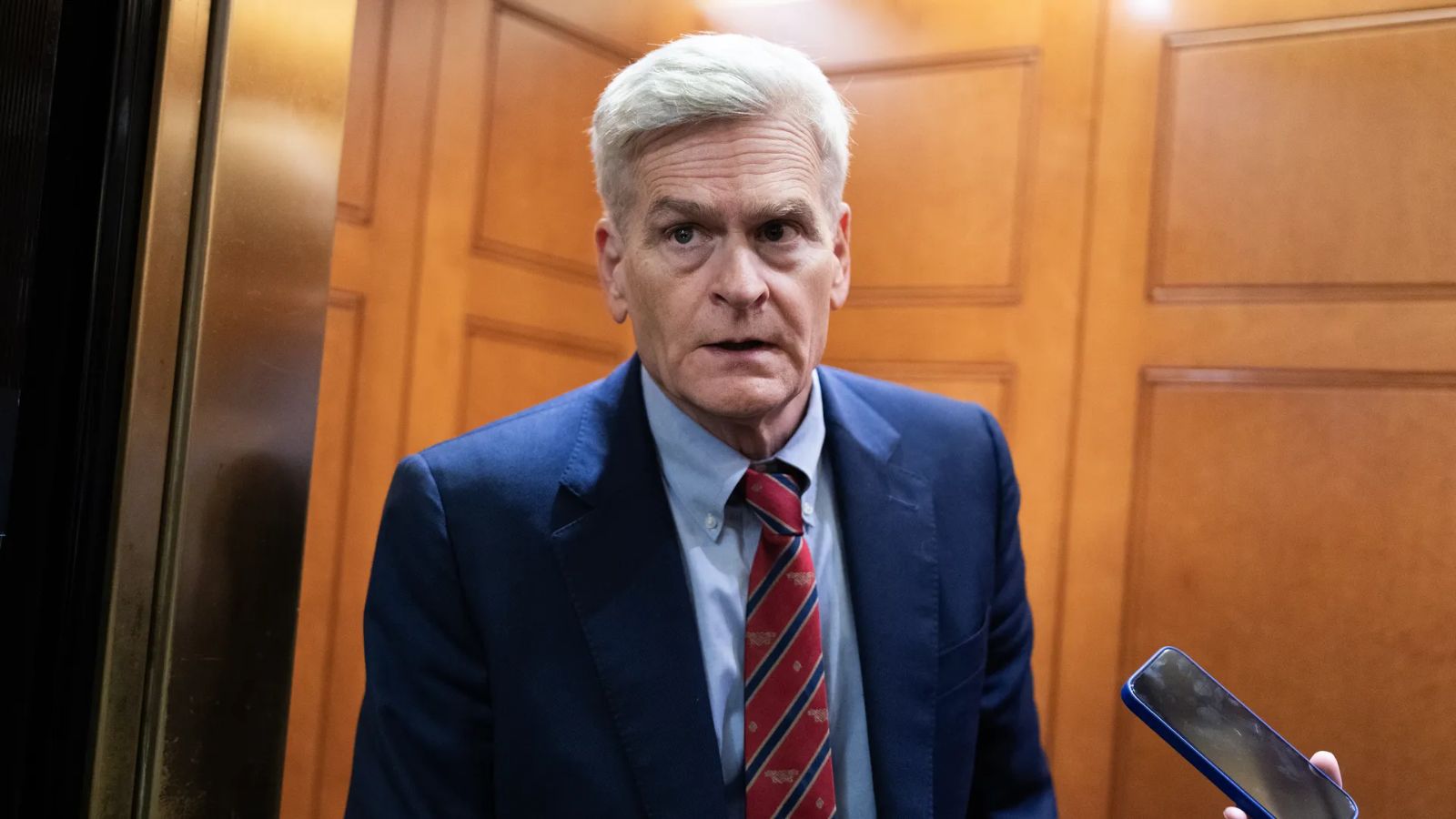
Despite Trump playing a sizable role in their losses, Republicans who could fight back against Trump’s unpopular agenda have chosen not to.
This was most clear during the confirmation process of Todd Blanche, Trump’s personal lawyer, to Attorney General. Although initially signalling opposition, when the time came, those reservations fell as both Cornyn and Cassidy would vote to confirm Blanche.
Cornyn noted it was impossible to “rein the president in” while Cassidy seemed to know the move would be unpopular stating: “”I’ll be criticized for this. What’s new?”.
Critics did indeed chastise the two for still capitulating to Trump, folding still to the man who has long disparaged them publicly, and leaving any vestige of dignity behind.
As the popular account Republicans Against Trump tweeted: “This spineless coward is leaving the Senate after losing a primary to a Trump-endorsed candidate, yet he still can’t find the spine to stand up to Trump’s corruption.”
Outside Groups Will Spend Big

Far and away the most discussed interest group in the 2026 Midterms is the powerful American-Israeli Public Affairs Committee (AIPAC). Although willing to pour in millions of dollars to back pro-Israel candidates, their funding has arguably been as much of a hindrance as it has been a help.
AIPAC had their greatest success in Kentucky where they were able to dislodge Thomas Massie, the most vocal Israel critic within the Republican Party. Breaking their own record set in 2024, AIPAC spent over $15 million to make this the most expensive House race ever – and like in 2024, it worked.
In Missouri, incumbent Wesley Bell easily vanquished progressive Squad member Cori Bush, outspending her by a 27:1 margin, according to some sources. Of Bell’s $4.6 million, $3 million came from AIPAC’s super PAC, via The Intercept.
Yet in some races, associations with AIPAC could either fail to help candidates or actively sink a candidate’s chances.
In Michigan, Abdul El-Sayed made AIPAC’s over $30 million a key attack point on opponent Haley Stevens. There are questions as to whether the money spent on Stevens by AIPAC helped Abdul win or whether AIPAC should have spent a little more of an already-bloated wad of cash on Stevens to help ease her over the line in a tight-knit contest.
In New York, incumbent Representative Dan Goldman was ejected by progressive Brad Lander, in a race where Goldman’s close connections to Israel and support from the Israeli lobby were forefront. According to the Track AIPAC website, he had received nearly $1 million from such outfits. In a widely-circulated and damaging clip during a debate, Goldman stated “I have no problem taking money from anyone who wants to give it to me.”
Common Dreams noted AIPAC has spent over $100 million in the 2026 cycle, far outspending from previous years. Yet they are not the only shady financiers who have helped chuck money into competitive races, with much criticism levelled at AI and crypto groups. These groups – often backed by billionaires – are desperately lobbying politicians to ensure the future is bright for AI and crypto, viewed by some as the future of the technological age.
Any Race Can Be Competitive

Flawed candidates, an unpopular president, and cross-party unity have all made some Senate races particularly hard to call in this election cycle.
In a few races, Democrats have arguably jeopardised their chances of victory.
Most notably, in Maine, Democrats originally nominated Graham Platner, a populist troubled by controversies such as a Nazi tattoo and having reportedly sexted other women. After being accused of rape, Platner would pull out of the race, having lost the support of his party post-nomination. Though he would be replaced with Troy Jackson, the Platner fallout could cost the Democrats. Polling by the University of Hampshire showed Platner winning by about 10 points but since Jackson took over, no aggregate polling has shown him with a lead of more than 3%. Maine, which the Democrats have not won since 1988, is seen as a must-win state for the Democrats, being the only seat Republicans are defending that Kamala Harris won in 2024.
Another such case is Michigan. Establishment favourite Haley Stevens, despite last-minute support from the incumbent Senator and state Governor, was defeated by the progressive Abdul El-Sayed, a move that some believe could cost the party. Decisions such as campaigning with left-wing streamer Hasan Piker could cost him in a purple state where centrists argue Stevens could perform better with moderate voters. In 2024, Trump won Michigan by 1.4% while Mike Rogers nearly won the Senate but fell short by just 19,000 votes. This time around, Rogers has already won the support of some Democratic figures such as state Representative Karen Whitsett and former Jill Biden speechwriter Michael LaRosa.
However, hopes to regain control of the Senate may not be pie in the sky considering the historic unpopularity of President Trump.
Democrats seem poised to make major wins in traditionally Republican states. In North Carolina, Democrats have nominated the popular former Governor Roy Cooper who has held a lead of betwen 8-10%. North Carolina has only voted Democrat for two elections since 1964, never once voting for Bill Clinton despite other southern states doing so. Democrats have only won three Senate races in the state since 1980. A similar story is unfolding in Ohio where former Senator Sherrod Brown is ahead a special election. Despite Trump winning the state by the largest margin since 1984 in 2024, it now seems that JD Vance’s old Senate seat could turn blue. In Georgia, which Trump won in 2024, popular incumbent Jon Ossoff seems to be drifting towards re-election.
One closely watched race is a toss-up in Texas, a layman’s prototypical idea of a ‘Republican state’. A perfect storm of Trump’s unpopularity, a heavily flawed Republican candidate, and a unifying Democrat have made the contest too close to call. Though Democrats have not won a Senate election here since 1988, Republican Ken Paxton is a man of many scandals from a previous impeachment by the Texas House to a previous criminal indictment to a plea deal the former Attorney General gave to allow a child sex offender only one day in jail. In contrast, James Talarico has put his Christian faith front and centre while railing against the corruption of his deeply blemished rival.
Though not as discussed, perhaps an even more startling win, Mary Peltola is currently polling ahead of incumbent Republican Dan Sullivan. Undoubtedly aided by another Dan Sullivan on the ballot, despite Juneau being a Democratic stronghold in the state, Democrats have been historically unsuccessful in the region. Only once since 1966 have the party won a Senate election (even then, they only won by 1.3% in 2008 when incumbent Ted Stevens had been criminally convicted just a week before polling day).
It just goes to show that in apparently the deepest of red states, with the right factors and when the stars align, anything can happen anywhere in the ever-unpredictable world of US politics.
GRIFFIN KAYE.
Leave a Reply