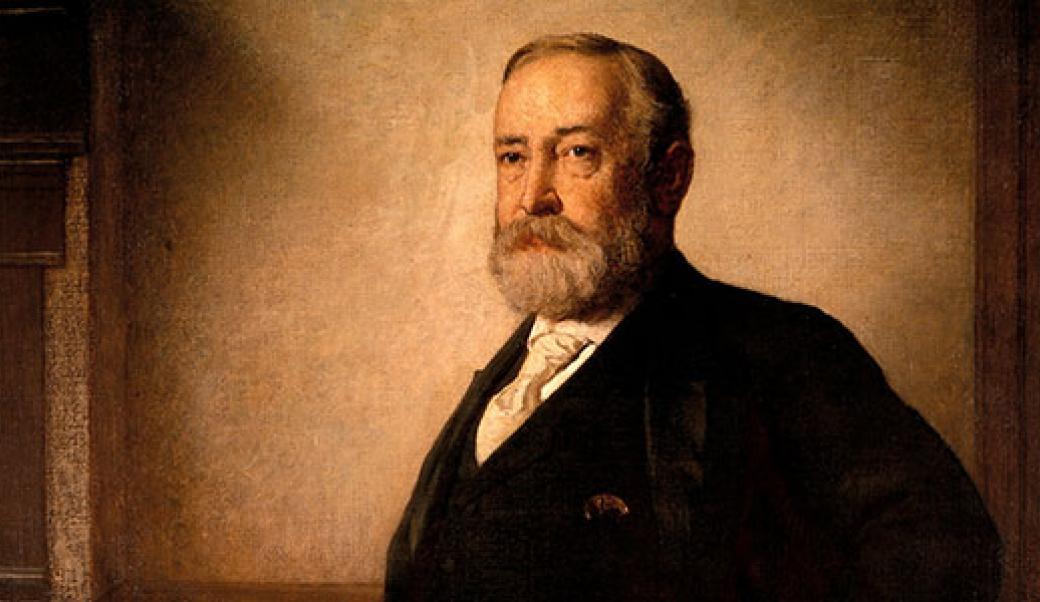
Hello, and welcome back to another edition of Lace ‘Em Up’s Presidential Election series today we will be going over the Election of of 1888 as incumbent President Grover Cleveland takes on Civil War Hero turned Conservative politician, Benjamin Harrison.
Grover Cleveland’s Presidency

After narrowly winning the previous election in 1884, Grover Cleveland began to enact much of his policies which included vetoing a large number of bills, reducing government spending, supporting free trade, having a non-interventionist foreign policy and even appointing various jobs within his administration.
Cleveland also found time during his presidency to get married as he found love with the 21-year-old, Frances Clara Folsom before the two tied the knot on June 2nd, 1886 making the now Mrs. Cleveland the youngest First Lady in American History.

When the time came for the Democratic Party’s nominating convention, Cleveland was unanimously re-nominated which was the first time since Martin Van Buren in 1840 that the Democrats renominated the incumbent president of their party.
One major change to Cleveland’s campaign ticket going into this election is the fact that Thomas Hendricks, the former Governor of Indiana and Cleveland’s Vice President had died just eight months into the term, so Grover’s running mate going into this election was a former Senator of Ohio named Allen G. Thurman.
Benjamin Harrison

The Republicans had a few names running for the nomination in 1888 but one name who wouldn’t be involved was James Blaine, who was the man Cleveland beat four years earlier to become the new President.
Although Blaine was the frontrunner at the GOP convention, he backed out as he realized that the Republicans needed to gather all of their support for a nominee that wouldn’t divide the party but as he withdrew his name from the proceedings, he did endorse two candidates running for the nomination with the first one being Ohio Senator, John Sherman who was the brother of a famous civil war hero and a candidate who ran for the nomination back 1880.
The other person Blaine endorsed was Benjamin Harrison, a Senator from Indiana who served as a General during the Civil War and he was the grandson of William Herny Harrison, the 9th President who died just 31 days into office.

The Republican Party chose Benjamin Harrison as their nominee mostly due to his record as a popular war hero, being a charismatic speaker and the fact that he lived in Indiana which was a swing state at the time.
Harrison’s running mate was Levi Morton a former banker and Congressman from New York who was the ambassador to France and the guy who almost became James Garfield’s pick for VP but declined the offer.
Tariff Issues & Political Campaigns

The biggest issue regarding this election was surrounding the idea of tariffs aka government taxes on imported goods; Cleveland like many in the Democratic Party are Classical Liberals or Bourbon Democrats meaning they believe in free trade and reducing taxes with Cleveland himself claiming that any unnecessary taxation is an unjust taxation.
Cleveland is also against union pensions for former Civil War veterans as part of his limited government policies and it’s these ideas plus his record in the White House is what Grover Cleveland is running on.
However, he didn’t actively campaign (as many politicians had done before) and instead left all of that in the hands of his 75-year-old running mate, Allen Thurman and you can only imagine how well that turned out.
Benjamin Harrison on the other hand is actively campaigning from his front porch in Indiana, a tactic similarly used to great success by former president James Garfield.
Harrison during the campaigns was in support of high tariffs which would help many factory workers who feared losing their jobs and having them shipped overseas due to all this free trade. He also is a bigger supporter of union pensions for war veterans which isn’t too surprising considering he is a former Union General in the Civil War.
The Murchison Letter and the Blocks of Five

To make sure that their man Benjamin Harrison got into the White House a few scandalous actions by members of the Republican Party took place during this election.
The first of these actions involved ‘The Murchison Letter’ which was a letter written by a GOP member from California who used a fake name to write to the then British Ambassador to the U.S., Lionel Sackville-West on who the British would support in the election, and the letter was reported to have said they the U.K. would support Grover Cleveland.
This is crucial because the U.K. was in favour of free trade much like Cleveland, but one group of people who aren’t so happy about this is Irish immigrants who live in the U.S. as many of them could lose their jobs as a result of all of this free trading and the Irish also have a frosty relationship with Britain, so the contents of the letter is used as a way to convince many Irish immigrants especially those in places like New York to vote for Harrison.
The other big scandal occurring in the election revolves around Indiana native and Treasurer of the Republican National Committee, William Wade Dudley who along with some others in Indiana attempted to split up Indiana into five districts and bribe many of the people there to vote for Harrison because Indiana was a swing state meaning the votes in that state can really swift the election in a big way.
This is soon discovered by the Democrats, and they are using this as ammunition against Harrison and the GOP as election day approaches; Not only that but it’s also because of this scandal that ballots were cast in secret going forward and not in the open…But will all of this play a big factor in this race? Well to find this out, let’s go to the results.
The Election of 1888: The Results

Much the previous election, the candidates needed 201 votes to win and in terms of the electoral vote, Benjamin Harrison became the 23rd President in American History receiving 233 votes whilst winning swing states like Indiana and even Grover Cleveland’s home state of New York.
It’s the state of New York that ultimately was the deciding factor as Grover barely won his home state in 1884 to become the president, had he done so again in this election Cleveland would’ve squeaked out with 204 votes to remain president, but it’s likely the results of the Murchison Letter and Cleveland’s own free trade beliefs that cost him New York.
In the end, Grover Cleveland received 168 electoral votes but actually defeated Harrison in the popular vote with Cleveland getting 48.6% to Harrison’s 47.8% making this the third time since 1876 in which the candidate who won the popular vote did not become President.
As Grover and his wife were getting ready to leave the White House, Frances Cleveland allegedly told the staffers that:
“I want you to take good care of all the furniture and ornaments in the house, for I want to find everything just as it is now when we come back again four year from today.”
If you like this kind of content, be sure to leave your thoughts down below in the comment section and be sure to follow Lace ‘Em Up on X @laceemupoffice you can follow me also on X @hakeemfullerton and I’ll see you in the next article
Leave a Reply