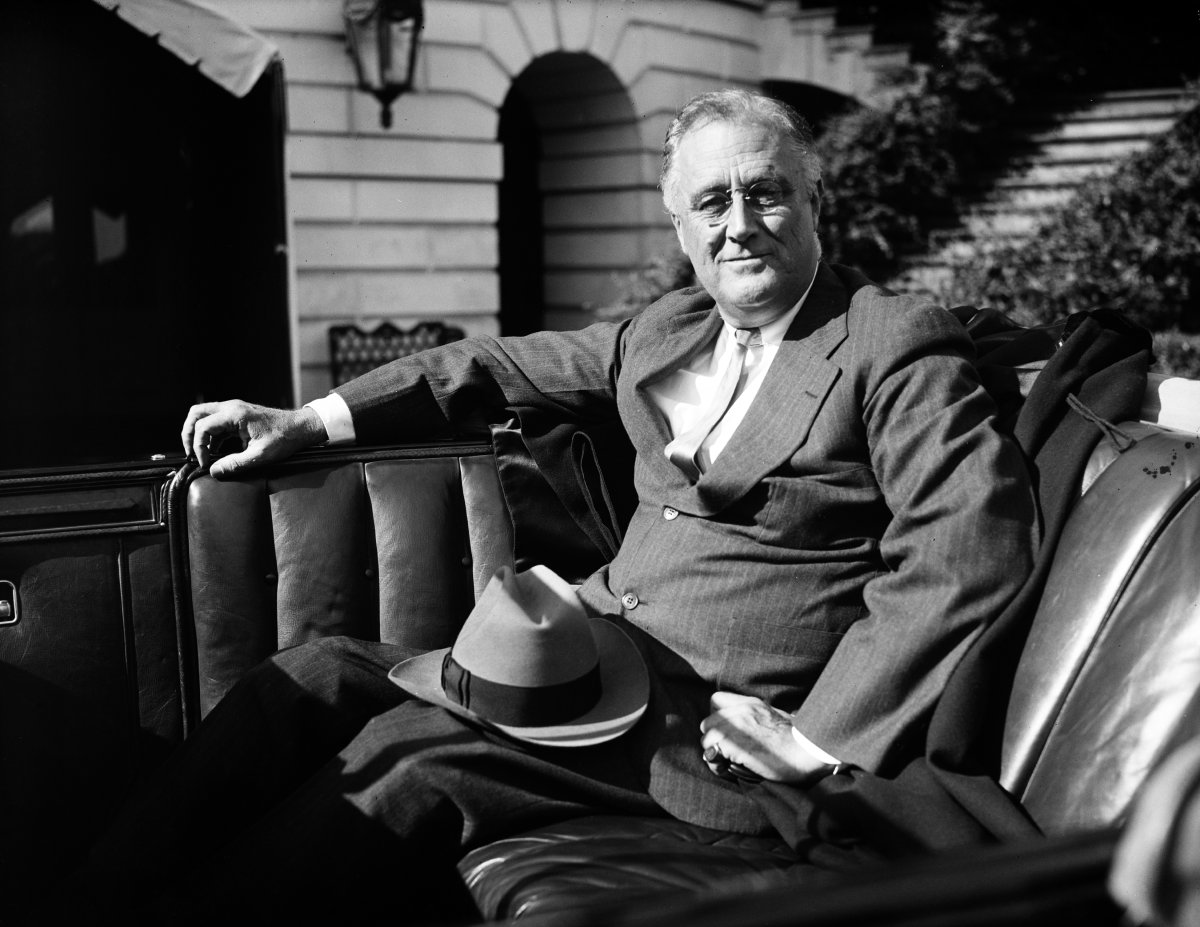
Hello and welcome back to another edition of Lace ‘Em Up’s Presidential Election series and today we will be going over the Election of 1932. President Herbert Hoover is up against a determined Democratic opponent this time around, but his also got to deal with one of the biggest economic disasters in all of the 20th century.
The End of the Roaring Twenties

Herbert Hoover, the former businessman and Secretary of Commerce soundly became the 31st President of the United States following a massive victory in 1928 which continued the Republican Party’s reign of dominance in presidential elections.
The new president looked certain to keep the level of the wealth and prosperity that came to define the 1920’s under his adminsration, but any illusions to that came to an end on October 29th, 1929.
On that day, the U.S. stock market crashed which left the finanical markets in a freefall and led to people withdrawing their money as quickly as possible.
In addition to this, a sharp decline when it came to international trading and years of deregulation under the previous regimes led to high unemployment, criminal activity skyrocketing and businesses both cutting wages and laying off its workers leading to a period simply known as “The Great Depression” .
Hoover’s Response & The Bonus Army

With unemployment reaching 23-25% and no safety system in place for the finanical markets, Herbert Hoover had to deal with one of the biggest issues any president has had to face since the Civil War or Reconstruction.
Hoover went on to sign acts like the Revenue Act of 1932 which attempted to bail out banks and struggling businesses by raising taxes and collecting it through tax payer dollars. He also passed the Smoot-Hawley Tariff Act which saw an increase on prices for imported goods as well as passing regulation laws to course correct rising unemployment and making work programs that led to the construction of landmarks like the Hoover Dam.
Sadly for President Hoover many of these acts weren’t able to deal the growing instablity with some arguing that it actually made the situation worse; This led to many people blaming the GOP and Hoover for the Great Depression as evidence by the shanty towns many Americans were living in which were called “Hoovervilles”.

However things getting really bad for Hoover when it came to dealing with ‘The Bonus Expedition Army’ who were all a band of former World War One veterans who were looking to get their miltary bonuses for serving in the war right now, despite the money not being owed to them until 1945.
The Senate refuses to support a bill that would allow the veterans to get their money at a time they would desperately need it, but Hoover’s decision to have the police and the military clear out the Hoovervilles occupied by the veterans leads to places being set on fire, two people dead and over a hundred veterans and police officers injured.
Although the president informed General Douglas MacArthur to not injure any of the occupants during the incident, MacArthur ignored Hoover’s words and took action against his fellow veterans with the general not being reprimanded whatsoever…And it is through all of this President Hoover decides to run for re-election with Charles Curtis once again as his running mate, but his chances of winning were silm compared to four years ago.
The Return of FDR

With the Great Depression gripping the nation in poverty and anger, The Democrats finally believed they had their opening to regain the White House since Woodrow Wilson’s re-election back in 1916.
The party’s major candidate for the nomination was New York Governor, Franklin Delano Roosevelt who we last saw in this series was the running mate to Ohio Governor, James M. Cox in 1920, but now was back after more than a decade of revitalizing his career.
Following his success in a number of primaries, Roosevelt won the nomination with John Nance Garnder who was the Speaker of the House as his running mate; It also helps that Garnder is from Texas which is not only a Southern state but has enough electoral votes to carry the Democrats to victory in the next election.
Roosevelt mentions during his acceptance speech at the convention that he plans on repealing the 18th Amendment which ban the production/sell/ consumation of alcohol nationwide, but also pledges to give a new deal to the American people saying that “This is more than a political campaign; It is a call to arms”.
Political Campaigns & Mudslinging

President Hoover’s attempts to campaign were unsuccessful as many Americans blamed the GOP and Hoover for getting the country into the depression and continuing policy of prohibition.
In addition to this, the aftermath of the Bonus Army is still fresh in everyone’s mind which is further hurting the president’s image althought many Republicans and the American people felt that Hoover’s chances of winning re-election were silm at best.
Roosevelt was the fan favorite to win as he gave speeches that are not only firing up the people, but also calling out the Hoover administration for their “recovery efforts” during a period of financial instability. His also using his name recongition and record as the Governor of New York to build a coalition of voters around Roosevelt and the Democrats which not only includes Farmers and Southern Whites but also Progressives, Liberals and Minorities especially African Americans who’s demands for change were being ignored by the Republicans for some time.
Both candidates would resort to public insults with Hoover refering to Roosevelt as a “Chamelon in Plain” while others referred to Hoover as a ‘Do-Nothing President’ or a ‘Socialist’, but perhaps the biggest insult leveled at Hoover was FDR calling him a “Fat, Timid, Capon”. For those unfamilar with the term, ‘capon’ basically means a castrated chicken…So in other words, Roosevelt called the President of the United States an overweight, scared cockless cock….What an insult.
Election of 1932: The Results

As election day rolled around in 1932, the outcome wasn’t all that surprising with Franklin Delano Roosevelt winning in a landslide to become the 32rd President in U.S. History. FDR won with 472 electoral votes and 57.4% of the popular vote.
Herbert Hoover received 59 electoral votes and 39.6% of the popular vote; In terms of the popular vote, this is the worse performance for a Republican President seeking re-election since William Howard Taft in the election of 1912 as Hoover suffered an 18.6% drop in the popular vote compared to the 1928 election.
Roosevelt’s victory marked the time since Franklin Pierce in 1852 that the Democrats won an election with a majority of both the popular and electoral vote. In fact, Roosevelt’s win saw him become the first Democratic Governor to win the popular vote since 1876 and he also became the last sitting U.S. Governor to win the presidency until 1990’s.
If you like this kind of content, be sure to leave your thoughts down below in the comment section and be sure to follow Lace ‘Em Up on X @laceemupoffice you can follow me also on X @hakeemfullerton and I’ll see you in the next article.
Leave a Reply