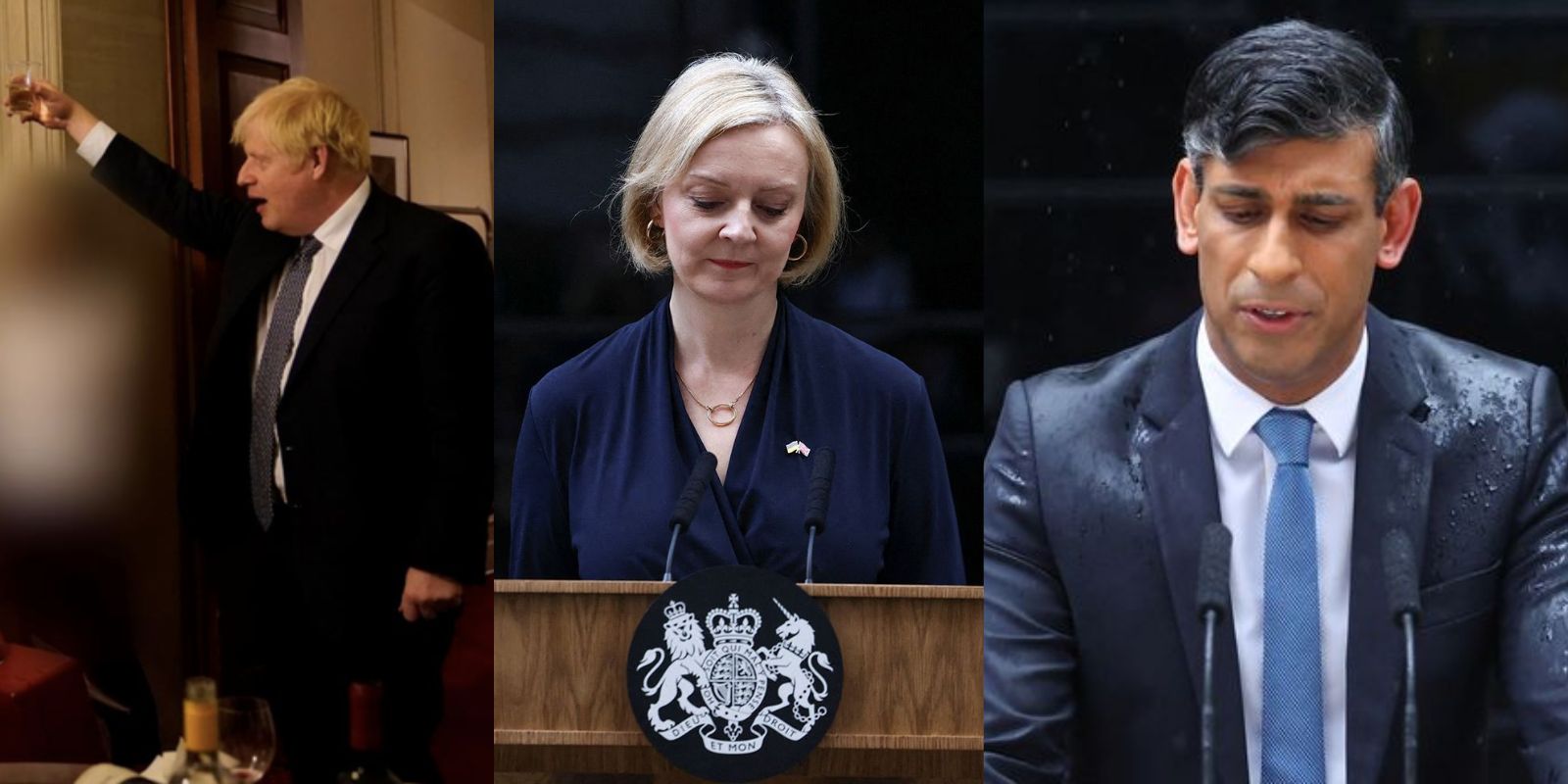
DECEMBER 12, 2019: Boris Johnson’s Conservative Party win the 2019 general election in a landslide result, gaining an 80-seat majority. Jeremy Corbyn’s Labour suffers the worst loss for the party in post-war Britain.

JANUARY 31, 2020: Britain officially withdraws from the European Union, more than three years after the referendum result, after the European Union (Withdrawal Agreement) Act 2020 is ratified.
MARCH 23, 2020: In a televised address to the nation, prime minister Boris Johnson orders a nationwide lockdown. Citizens are advised to stay at home except for “very limited purposes.” People may only leave their residence to shop for necessities, exercise, or travelling to work if essential or unable to do from home.
APRIL 4, 2020: Former Shadow Minister Sir Keir Starmer wins the Labour leadership election on the first ballot with over 50% of the vote. It signals a return for the party to the more moderate, centre-ground after Corbyn’s leadership – the most left-wing in decades.
APRIL 18, 2020: Cabinet Minister Michael Gove confirms that Johnson did not attend five emergency Cabinet Office Briefing Room (COBRA) meetings. The Sunday Times stated Boris did this during “a crucial five weeks in the fight to tackle the dangerous threat of coronavirus despite being in a perilously poor state of preparation for a pandemic.”
MAY 22, 2020: Chief Advisor to the Prime Minister Dominic Cummings breaks lockdown rules by driving over 250 miles from London to Barnard Castle in Durham. A few days later, he stages a press conference where his explanation is disbelieved by 67% of voters. Once described as “the prime minister in all but name” by Savid Javid, he did not resign despite popular support for the idea he do so and continued to be backed by Johnson.
NOVEMBER 5, 2020: Boris Johnson calls a second lockdown amidst an autumn wave of infections, remarking: “I’m under no illusions about how difficult this will be for businesses which have already had to endure such hardship this year and I’m truly, truly sorry for that.” 34 rebels voted against the measure, including high profile figures such as 1922 Committee chairman Graham Brady, former Tory Party leader Iain Duncan Smith, and former Conservative leadership challenger John Redwood; previous prime minister Theresa May abstained.

NOVEMBER 29, 2020: In a display of his disciplinary leadership style over the Labour Party, Starmer suspends former leader Jeremy Corbyn after he called an Equality and Human Rights Commission criticised the party’s handling of anti-Semitism accusations, calling it “dramatically overstated for political reasons.” YouGov polling found this move to be popular amongst those surveyed. The whip would not be restore as he would sit as an independent in Parliament. In 2023, the National Executive Committee would rule that Corbyn would not be able to stand as a Labour candidate going forward.
DECEMBER 8, 2020: Patient 90-year-old Margaret Keenan becomes the first person in the world to receive the approved Pfizer vaccine. The UK becomes the first nation to embark on a vaccine rollout as the elderly, key workers, and the immuno-compromised are prioritised. By May 2021, 60 million doses had been administered.
DECEMBER 21, 2020: Tier 4 restrictions take effect in the South East and London. This backtracked on previously announced government plans to relax Covid restrictions during Christmas. He commented: “It is with a very heavy heart that I must tell you we cannot continue with Christmas as planned.”
DECEMBER 21, 2020: On the same day, The Guardian reports that Tory Peer Baroness Mone used the government’s VIP lane to win government contracts on behalf of PPE Medpro. She reportedly lobbied government figures Michael Gove and Theodore Agnew, and was awarded £200 million in Personal Protective Equipment (PPE) contracts. The scandal would keep brewing, with Mone stepping down from the House of Lords in December 2022. The next month, the UK saw its lowest-ever score on the Corruption Perceptions Index.
JANUARY 6, 2021: The government announces a third lockdown. The move is popular although The Observer’s Opinium poll finding Labour had a four point lead, their highest lead recorded since the last election. 32% believe Starmer would be the best prime minister to 29% for Boris Johnson; 49% disapprove of Boris’s leadership.
JANUARY 26, 2021: The United Kingdom becomes the first European nation to reach 100,000 deaths of Covid. Previously, government scientific advisers pitched 50,000 deaths as the worst-case scenario.
MARCH 19, 2021: Former prime minister David Cameron is found to have lobbied the government on behalf of Greensill capital, including texts to Chancellor Rishi Sunak. Founded by his former adviser Lex Greensill, Cameron’s attempt to benefit from the Covid loans scheme was another corruption scandal for the government and one that would be revived once Lord Cameron became Foreign Secretary.
APRIL 23, 2021: Reports first break of Boris Johnson’s refurbishment of 11 Downing Street, controversial for breaking the rules of political donations. Costing over £100,000, the move was described by former advisor Cummings as “unethical, foolish, possibly illegal.” It was speculated the move had broken the Ministerial Code, leading to Scottish Conservatives leader Douglas Ross to state he should resign if found of violations in a report.
APRIL 26, 2021: It is widely reported that Boris Johnson would rather have citizens die in their thousands than be forced into yet another lockdown. He reportedly commented: “No more fucking lockdowns, let the bodies pile high in their thousands.” Cummings has stated Johnson did make the comment.
MAY 6, 2021: The Conservatives triumph in the 2021 Hartlepool by-election, winning the seat from Labour. The first by-election since the 2019, it was devastating for Labour as not only was it an extremely rare gain by an incumbent government but the biggest swing (16%) to an incumbent government in the post-war era. After the Conservatives won the Labour stronghold for the first time, former MP and Labour spin doctor Peter Mandelson conceded: “Since Labour left office in 2010 we haven’t played it well.” It also raised major questions over Keir Starmer’s leadership as he nearly stood down after the loss.

JUNE 14, 2021: Boris Johnson announces a delay to so-called “Freedom Day”, a relaxation of Covid rules, by four weeks. This moves the lifting of restrictions from June 21st to July 19th. This is due to the Delta variant, which saw a 250% increase in June. Starmer blames the government’s border policy, as India – where the strain originated – was not placed on the travel red list fast.
JUNE 17, 2021: The Conservatives suffer a surprise by-election loss, as the Liberal Democrats take Chesham and Amersham. Labour win their lowest-ever vote share in a by-election at 1.6%.
June 26, 2021: Health Secretary Matt Hancock resigns after he breaks government Covid rules on social distancing when having an affair with his political aide. Editor-in-chief of the British Medical Journal Fiona Godley stated he was perhaps the worst Health Secretary ever due to the “blatant cronyism and corruption” seen under his tenure, adding: “the way he broke his own rules in the end was the final straw.” The sleaze scandal is seen as a vital event influencing the subsequent Batley and Spen by-election in which Labour earned an unexpected victory.
October 24, 2021: A month after the country faces an oil shortage leading to panic buying, petrol prices reach an all-time high at 142.94p a letre, beating the previous peak in 2012. Petrol cost 28p a litre more than a year previously.
October 26, 2021: The parliamentary Committee on Standards publish a report on Conservative MP Owen Paterson, who broke lobbying rules, noting how he “brought the House into disrepute.” After the committee recommended a 30-day suspension, Boris Johnson backed a Conservative amendment which would delay the suspension as a committee would be set up to review disciplinary practices. After backlash, Paterson eventually resigns. Keir Starmer wrote: “I am sick of people skirting around calling this out for what it is: corruption… We have a prime minister whose name is synonymous with sleaze, dodgy deals and hypocrisy.”
NOVEMBER 12, 2021: Labour overtake the Tories in opinion polling again, starting a two-year-plus run with Labour beating the incumbent government. A YouGov survey found 60% of those asked agreed with the statement the Conservatives had a “very sleazy and disreputable” reputation.
NOVEMBER 30, 2021: The Daily Mirror are the first to report on government parties that had taken place in Downing Street, known as “Partygate”. At the time, the nation was in lockdown, drawing widespread criticism, especially for one party which occurred on the eve of the funeral of Prince Philip. The controversy would continue to haunt Johnson’s premiership and tenure in parliament.

DECEMBER 16, 2021: The Conservatives lose the previously ultra-safe North Shropshire seat. Previously wielding a 23,000-strong majority, the Liberal Democrats win on a 34% swing, one of the largest of all time. Factors influencing the loss included the scandal of ex-MP Paterson as well as the continued Partygate controversy, with press secretary Allegra Stratton resigning the previous week after leaked footage showed her joking about Christmas Downing Street parties, laughing about the “no social distancing” involved.
2021: Labour would lose 100,000 party members in 2021, even in spite of their poll lead.
JANUARY 31, 2022: Boris Johnson remarks in the House of Commons that Leader of the Opposition Keir Starmer failed to prosecute Jimmy Savile when Director of Public Prosecutions for the Crown Prosecution Service. The slur, which caused threats of violence towards Starmer, would be described by the Labour leader as “a new low for a man for whom I’ve got almost no regard.” It prompted Tory MPs to call on Johnson to resign whilst Munira Mirza, Director of the Number 10 Policy Unit, resigned. Only 15% of the public thought the comments were appropriate.
FEBRUARY 24, 2022: Russia invades Ukraine. Despite Johnson’s notable stand on the world stage and his beloved image in Ukraine, the Conservatives still fail to outpoll Labour, whose support for Ukraine reflects the government’s.
APRIL 12, 2022: Boris Johnson becomes the first prime minister in history to have been charged with breaking the law when given a £50 fixed penalty notice for breaking lockdown restrictions. Also fined are Johnson’s wife Carrie Symonds and Chancellor Rishi Sunak.

MAY 5, 2022: Labour win the popular vote in the local elections. Labour pick up over 3,000 councillors, more than double that of the Conservatives, who lose nearly 500.
MAY 25, 2022: Civil servant Sue Gray publishes her report on Partygate, which cites “failures of leadership and judgment in No 10 and the Cabinet Office.” Covid rules were not complied with, whilst those partying acted in an “unacceptable” manner and celebrated with pizza, alcohol, and karaoke. This was compounded by images released days earlier showing Johnson present at one of these events.
JUNE 6, 2022: Chairman of the 1922 Committee of Conservative backbenchers announces the 15% threshold of no confidence letters in the prime minister has been reached. A vote is scheduled for later in the day. Although he survived, over 40% of his own MPs voted against him, far more than was expected. The 148-strong pool of opposition included senior Conservative figures such as Jeremy Hunt and Damian Green.
JUNE 7, 2022: The Rail, Maritime and Transport Union (RMT) announces strike action will go ahead. Described as “the biggest dispute on the network since 1989,” the long-running disputes still remain, lasting across three different prime ministers.
JUNE 23, 2022: Two by-elections are held on the same day, both of which the government loses. The first double-loss for a government since 1991, Labour gained Wakefield whilst the Lib Dems won Tiverton and Honiton – the latter of which saw the Liberals overturn the biggest majority in by-election ever. In the aftermath, Conservative Party chairman Oliver Dowden resigns. Wakefield was Labour’s first by-election gain since 2012.
JUNE 30, 2022: Chris Pincher resigns as Deputy Chief Whip after groping allegations came to light. The move was notable as Boris Johnson put Pincher in the post despite previous knowledge of Pincher’s sexual misconduct, once reportedly commenting he was “Pincher by name, pincher by nature.”

JULY 5, 2022: The mass government resignations start, with Health Secretary Savid Javid and Chancellor Rishi Sunak amongst those saying they could no longer support Johnson’s ministry. Sunak wrote: “the public rightfully expect government to be conducted properly, competently, and seriously.”
JULY 7, 2022: With Boris’s position becoming increasingly untenable, he resigns. The highest number of resignations in modest history forced him out as 62 MPs departed from their posts whilst 17 ministers resigned. Even when departing, the prime minister signalled he may make a comeback, remarking in the House of Commons: “Hasta la vista, baby!”
SEPTEMBER 6, 2022: Liz Truss wins the Conservative Party leadership race, defeating Rishi Sunak 57%-43%.
SEPTEMBER 8, 2022: Queen Elizabeth passes away. In a move showing how Labour had vastly differed from its Corbynite days, Starmer pays tribute to the Queen at Labour’s party conference whilst the national anthem “God Save The King” is sung.
SEPTEMBER 23, 2022: After a mourning period after the Queen’s death, new Chancellor Kwasi Kwarteng unveils the so-called mini-budget. Without consultation from the Office for Budget Responsibility (OBR), Kwarteng announced the most drastic tax-cutting measures in 50 years which abolished the 45% rate of income tax and cut the basic rate of income tax amongst other measures. Afterwards, the Bank of England had to intervene to avert a market crisis, with the sterling reaching an all-time low against the dollar on September 26th at just $1.0327.

OCTOBER 3, 2022: Kwarteng announces a reverse on the abolishing of the 45% cut in the tax rate. The u-turn spurned criticism even from right-wing papers such as The Daily Mail, who ran the headline: “Get a grip!”
OCTOBER 14, 2022: Liz Truss calls Kwarteng back to the UK from an overseas visit to ask him to resign. Jeremy Hunt takes his place and within days, announced an overhaul of the previously announced mini-budget. BBC’s Economics Editor Faisal Islam would refer to the reversal as “the biggest u-turn in British economic history.” The move put the final nail in the coffin for “Trussonomics”.
OCTOBER 17, 2022: Labour records a mammoth 36% percentage point lead over the Conservatives. The Redfield & Wilton survey had Labour on 56% to the Conservatives 20%; had these results been projected in a general election, the Conservatives would likely no longer be the main opposition party in Westminster, falling behind the Scottish National Party. This was the biggest lead for any party since 1997.
OCTOBER 20, 2022: Chairman of the 1922 Committee Graham Brady meets with the prime minister to tell her she likely does not have enough support from her own MPs to stay in power. This came just one day after highly publicised comments made by backbencher Sir Charles Walker in which he accused the government of featuring “talentless people,” who had proceeded over “a shambles and a disgrace.” Liz Truss resigns, making her tenure the shortest of any UK prime minister at less than two months. A leadership contest is announced.
OCTOBER 25, 2022: Former Chancellor Rishi Sunak wins the Conservative Party leadership contest unopposed. The new prime minister was the only candidate able to get the support of over 100 MPs, victorious after Penny Mordaunt withdrew citing a lack of support and Boris Johnson dropped what looked like a last-minute entry. Some commentators pointed out how Suank was entirely unelected by the public, with the MPs who voted him in representing 0.0003% of the British population.

OCTOBER 2022: Amidst the cost-of-living crisis, inflation reaches its peak of 11.1%, a 41-year high. Factors such as the Covid pandemic, Brexit, and the Russian invasion of Ukraine are commonly-cited factors influencing this rise.
NOVEMBER 2, 2022: Prime Minister Sunak reneges on a previous announcement that he would not attend the COP27 climate summit. A u-turn early into his premiership, the move was criticised as being a misstep on the world stage with Shadow Climate Secretary Ed Miliband stating: “The prime minister has been shamed into going to COP27 by the torrent of disbelief that he would fail to turn up. He is going to avoid embarrassment, not to provide leadership.”
JANUARY 21, 2023: The Sunday Times is the first to report that then-BBC Chairman Richard Sharp had helped Boris Johnson secure an 800,000 loan just weeks before obtaining the post. It was yet another sleaze scandal that put Johnson in a bad light whilst questioning the impartiality of the BBC. Sharp would not resign until April, making it a long-lasting headache for the Conservative Party, with Sunak choosing to not sack Sharp.
JANUARY 29, 2023: Chairman of the Conservative Party Nadhim Zahawi is dismissed by Rishi Sunak. A report had noted Zahawi had breached the Ministerial Code seven times over a lack of transparency over his tax affairs. He had previously paid an alleged seven-figure penalty to Her Majesty’s Revenue and Customs (HMRC).
MARCH 28, 2023: Having announced her resignation the previous month, Scottish National Party and Scottish First Minister Nicola Sturgeon is succeeded by Humza Yousaf. The change of leadership is notable as polling guru John Curtice has commented that “Humza Yousaf is nothing like as popular” as Sturgeon, opening the door for Labour success in Scotland at the next election.
APRIL 21, 2023: Deputy Prime Minister Dominic Raab resigns after a report found that he had bullied civil servants through use of intimidation and insults, stemming from eight official complaints by 24 individuals. Raab resigned the day after the report was given to PM Sunak, although was critical, declaring: “in setting the threshold for bullying so low, this inquiry has set a dangerous precedent”. He too blamed “activist civil servants.”
MAY 4, 2023: The Conservatives suffer substantial losses in the local elections, including over 1,000 councillors. Labour became the biggest party in local government for the first time since 2002.

JUNE 9, 2023: Boris Johnson resigns as an MP after a parliamentary committee ruled he had misled Parliament over Partygate. Had MPs voted with the findings of the committee, Boris would likely face a by-election. The former PM instead resigned, calling the findings a “witch hunt” from a “kangaroo court.” In his resignation, he too attacked Sunak, with whom he would clash over Johnson’s resignation honours list when Sunak refused to overrule House of Lord Appointments Commission rejections from Boris’s list.
JUNE 11, 2023: Former SNP leader and First Minister Nicola Sturgeon is arrested over discrepancies in SNP finances. £600,000 meant to campaign for Scottish independence had gone missing, leading to a police probe. Although a motorhome was seized by police, she was released without charge. Another SNP scandal, its impact could help Labour, looking to form the next UK government.
JUNE 20, 2023: MPs vote 354-7 to uphold the committee’s findings on Johnson. Although many senior figures abstained or did not show up for the vote, 118 Tories still voted against the former PM such as previous prime minister Theresa May and Commons Leader Penny Mordaunt. It was an emphatic vote on Johnson’s parliamentary career and one that may be impossible to come back from.
JUNE 28, 2023: The Trussell Trust charity reports than 11.3 million people faced hunger, with one in seven going hungry as they could not afford food. It shows the impact of the cost-of-living and given Labour a stick to beat the Conservatives with politically.
JULY 6, 2023: The government loses a legal case after the High Court rules Boris Johnson’s WhatsApp messages must be handed to the Covid-19 Inquiry. The government reportedly used £200,000 of taxpayer money to fight the case. The inquiry would continue through 2023, continuing to discredit the government.
JULY 20, 2023: Three by-elections face the government. They narrowly hold on to the competitive Uxbridge and South Ruislip constituency by 400 votes, a win chalked up to the unpopularity of the expanded Ultra Low Emission Zone (ULEZ), which would come into effect in all of London in August. However, they lost Somertom and Frome to the Lib Dems by a wide margin and lost Selby and Ainsty to Labour, in what was both the largest majority ever overturned by Labour and the second biggest swing to the party since 1945.
SEPTEMBER 3, 2023: The highest daily number of small boat crossings of 2023 is recorded. Indeed, despite Sunak making “Stop the Boats” his main pledge of 2023, 872 migrants crossed on this date, undermining one of his main priorities.
SEPTEMBER 20, 2023: Rishi Sunak waters down a number of the UK’s green commitments. In a televised address, he announced plans to delay bans on phasing out petrol and diesel cars and oil boilers amongst other reversals. Such a policy was widely criticised, including by Boris Johnson.
OCTOBER 4, 2023: Rishi Sunak announces he is scrapping the HS2 project’s leg from the West Midland to Manchester. Some accused him of betraying the north whilst other accused him of wasting billions on a project just to cut the legs off. This move was criticised by both Boris Johnson and David Cameron.
OCTOBER 5, 2023: Labour win a by-election in Rutherglen and Hamilton West, taking the seat from the SNP. After sitting MP Margaret Ferrier was suspended for breaking Covid rules, Labour’s Michael Shanks won the seat with 58.6% of the vote. The SNP won just 27.6% whilst all other parties, including the governing Conservative Party, lose their deposit. It was a sign that at the next election, Labour could regain a foothold in the country and take over many SNP seats.

OCTOBER 16, 2023: It is recommended by the Independent Expert Panel that senior Tory MP Peter Bone be suspended from the Commons for bullying and sexual misconduct.
OCTOBER 19, 2023: In a devastating result, the Conservatives lose two by-elections. In Tamworth, the Labour won the seat on a 23.9% swing, the second-highest ever swing to Labour in a by-election. In Mid-Bedfordshire, Labour overturned their largest majority ever of 24,664 – the win marked the first time Labour had ever won the seat and the first time a non-Tory had won the seat since 1931. The losses have been compared to John Major’s in the build to the 1997 election and has been described as “one of the worst nights any government has endured.”
NOVEMBER 7, 2023: King Charles lays out the government’s legislative agenda in The King’s Speech. Perhaps the last major legislative opportunity before an election, it had the fewest bill proposal of any State Opening of Parliament since 2014.
NOVEMBER 13, 2023: Home Secretary Suella Braverman is removed from her post. A partisan character, she had come under increasing fire to be removed after a number of controversial actions, including stating the homeless sleeping in tents was a “lifestyle choice” and writing in The Times about police impartiality in the build up to a Remembrance Day Palestinian protest – a letter that was not cleared by Number 10. She was replaced by Foreign Secretary James Cleverly. He was replaced, in a shock move, by David Cameron, who was soon sworn into the House of Lords as Lord Cameron. The first PM to return to the Cabinet in over 50 years, it was seen as a move bringing the party more to the centre, where they were more electable.

NOVEMBER 15, 2023: The Supreme Court unanimously rules against government legislation that would deport asylum seekers and illegal migrants to Rwanda. First announced in 2022 under Johnson, the ruling from the top court in the land put a bullet in Sunak’s flagship policy. The idea had long faced criticism from figures such as Gary Lineker, Archbishop of Canterbury Justin Welby, and reportedly King Charles. It had also previously faced opposition in the House of Lords.
NOVEMBER 16, 2023: Parliament votes on an SNP motion for a ceasefire in Gaza, in which Starmer tells his MPs to not support. Although 56 Labour MPs rebelled against Starmer’s stance – including 10 frontbench MPs – it proved how Starmer was still able to rein in his party and not prevent a major party fallout.
NOVEMBER 22, 2023: The government unveils the Autumn Statement. In it, Chancellor Hunt announces measures such as cutting the rate of National Insurance, raising the minimum wage by upwards of one pound, and increasing the state pension by 8.5%. Notably though, it did not increase tax cuts, which many Conservatives had long been calling for. This was against the backdrop of the highest tax burden in post-war Britain.
DECEMBER 4, 2023: Rishi Sunak’s government suffers its first parliamentary defeat on an amendment to the Victims and Prisoners Bill which would compensate blood contamination victims. Although not on a major legislative programme, it shows that despite their 2019 80-strong majority, it just takes a few – in this case 22 – votes against the government to defeat a backed motion.
DECEMBER 13, 2023: A YouGov poll finds Rishi Sunak’s popularity as PM hits its lowest rating yet at –49. 70% also believe he should no longer be the prime minister.
2023: Of the five priorities Sunak made earlier this year, only one has been achieved. Even then, the only successful pledge, to halve inflation, is more creditable to the Bank of England rather than the government.
JANURY 4, 2024: Richard Tice, leader of the right-wing nationalist Reform UK, announces the party will stand in every seat in the UK. The likely effect of this is that it will split the Conservatives vote, meaning they will lose an even greater number of seats. Looking at the two by-elections in Tamworth and Mid-Bedfordshire, had Reform UK stood down and their votes gone to the Tories, the government would have retained both seats.

JANURY 9, 2024: Liberal Democrat leader Ed Davey comes under pressure from his role in the Post Office scandal, at which point he was Post Office minister. Some called for him to return his knighthood whilst his popularity fell from –4 to –13.
JANURY 16, 2024: After a review of the scheduled boundary changes, it is found that Labour would need a record swing to win the next general election. Keir Starmer’s party would need a national 12.7% percentage point swing to gain a majority, more than Tony Blair’s 10.2% attained in 1997.
JANURY 16, 2024: Deputy Chairmen of the Conservative Party Lee Anderson and Brendan Clarke-Smith resign their posts after voting against the government, along with 60 MPs, in supporting a Bill Cash amendment to the Rwanda bill which would allow the UK to overrule international law. The next day, former Immigration minister Robert Jenrick and former Home Secretary Suella Braverman voted against the government, showing the splits within party.
JANURY 23, 2024: In one of the most explicit rebellions yet, Simon Clarke – a Cabinet member in the Johnson administration and key ally of Liz Truss, writes in The Telegraph that the Conservative Party should replace their leader before the next general election, noting Sunak was “leading the Conservatives into an election where we will be massacred.” There had long been a sense his own MPs were plotting to replace him, and this only fueled further speculation.
FEBRUARY 1, 2024: A day after controversially announced they would not again place a cap on bankers’ bonuses, Labour announce they would not raise corporation tax. No Labour government has done so since 1976, with the move seen as Labour trying to woo and win back the convince of businesses. This again shows the dichotomy between Starmer’s more moderate, pro-capitalist leadership compared to Jeremy Corbyn.
FEBRUARY 6, 2024: The same day his former boss Liz Truss speaks at a National Conservative conference, former Chancellor Kwasi Kwarteng announces he will step down from his presumably safe Conservative seat in Spelthorne, less than six months after his disastrous mini-budget.
FEBRUARY 7, 2024: Rishi Sunak faces criticism for claiming trans women are not women. Although he had previously made similar comments, these were particularly loathed for being said when the parents of Brianna Ghey – a trans girl killed for her identity – were present in the chamber.
FEBRUARY 8, 2024: After much speculation, the Labour Party ditches one of its flagship pledges, a £28 billion green spending policy. Yet another u-turn on the party policy, the Green Party’s Caroline Lucas stated they were enforcing much-maligned austerity, adding “I don’t think I would like to be a Labour MP looking into the eyes of my kids or grandkids, saying: “Really sorry I couldn’t pass on a livable planet to you but it actually wasn’t convenient for our fiscal rules.” Seen as Starmer being more of a realist, he claimed the spending commitment could not be made due to the economic instability bought on by the Tories. That said, it provided an easy point of ridicule from across the political spectrum.
FEBRUARY 12, 2024: More trouble for Labour as they are forced to withdraw support at the last minute for their candidate in an upcoming by-election. The candidate to win the safe Rochdale seat, Azhar Ali, was recorded making anti-Semitic comments on tape but was still nonetheless backed by the party until February 12th. Finally withdrawing support, it was too late to replace Ali but more than that, the refusal to immediately sack Ali was seen as having harmed Starmer’s years of scrubbing anti-Semitism from the party.
FEBRUARY 15, 2024: Labour wins two by-elections on the same day. In Kingswood, Labour win in a by-election caused by the resignation of Tory MP Chris Skidmore over the government policy of giving oil licenses to offshore companies, having described Sunak’s net zero u-turn as “the greatest mistake of [Rishi Sunak’s] premiership.” In Wellingborough, they overturned a majority of 18,540, winning with the second biggest Labour swing in the post-war era at 28.5%. The Tory vote fell 37.6%, the largest fall in vote share in a by-election since 1948 and second largest on record, likely due to the sexual misconduct that forced out sitting MP Peter Bone. Another worrying sign for the Conservatives was the 13% of the vote won by Reform UK.

FEBRUARY 19, 2024: With Birmingham City Council going bankrupt last year, it is forced to hike taxes. The largest local authority in Europe, it raises council tax by 21% as part of £300 million in budget cuts. A Labour-run governing body, it has been a point of attack from Conservatives, with Sunak attacking Labour spending as “woefully mismanaged financially.”
FEBRUARY 21, 2024: A second SNP motion for a ceasefire had been submitted for an SNP Opposition Day. However, Speaker Lindsay Hoyle broke convention by allowing both a government amendment and Labour amendment, ignoring his own clerk’s advice. Causing uproar, both the SNP and government objected, walking out in protest. The Speaker faced Conservative, SNP, and Plaid Cymru opposition in the form of a no confidence motion. This further drew dividing lines between the parties and could be crucial in the case of a hung parliament, with the SNP and Labour relations souring even if they may be forced to co-operate after the next election.
FEBRUARY 24, 2024: Lee Anderson, a Red Wall Tory and member of the New Conservative faction, is suspended by the Conservative Party over Islamophobic comments directed at London Mayor Sadiq Khan. A voice on the party’s far-right, he had commented that extremists and Islamists “got control of London”, stating Khan had “given the city away to his mates.” The Conservative MP and practising Muslim Rehman Chishti called the comments “completely and utterly unacceptable.”
FEBRUARY 27, 2024: New Tory MP Scott Benton is suspended from the Commons for 35 days. In April 2023, he had been suspended for lobbying in exchange for cash. This caused a recall petition and likely by-election in the Blackpool South seat which would likely be another loss for the Conservatives.
FEBRUARY 29, 2024: The Rochdale by-election takes place. Although Labour are the incumbent party there, no Labour candidate is on the ballot due to the Azhar Ali controversy. The by-election is instead won by the controversial anti-war socialist George Galloway, perhaps the nightmare result for Labour. He ran on a pro-Palestine platform, declaring: “Keir Starmer, this is for Gaza. You have paid, and you will pay, a high price for the role that you have played in enabling, encouraging and covering for the catastrophe presently going on in occupied Palestine in the Gaza Strip.” Starmer apologised to Rochdale residents, pledging to stand a suitable candidate in the next general election. Additionally, the government came third, behind repair shop owner and Independent candidate David Tully.
MARCH 6, 2024: Chancellor Jeremy Hunt delivers the UK Budget, one of the largest major chances for the party to make a major pre-election gambit with voters. Amongst its talking points were a 2p reduction in the National Insurance from 10% to 8% in April, with a view to eventually abolish NI, which Labour claims would lead to a £46 billion hole. Too notable was the scrapping of the ‘non-dom’ tax status, which Labour was able to claim had been stolen from them. Perhaps more importantly, there were no income tax cuts to talk about. The Financial Times described it as a “non-buzz Budget” which “fail[ed] to convince voters as opinion polls show Labour lead increasing.”
MARCH 8, 2024: Arguably the most notable name to do so, former Chair of the Conservative Party, Home Secretary, and Prime Minister Theresa May announces she will stand down at the next election. A one-nation conservative, in her post-premiership, she has been a powerful voice against her own party’s government, including on Partygate, Sunak’s watering down of net zero goals, and the Rwanda scheme. She has been an MP since 1997.

MARCH 11, 2024: Suspended Tory MP Lee Anderson joins the rising right-wing party Reform UK, marking their first MP. The more hardline party on matters of immigration in particular, their growing popularity across the country will be an important factor in the election, perhaps splitting the vote and potentially costing the party dozens of seats.
MARCH 11, 2024: On the same day, another PR headache for the government as a top Tory donor Frank Hester makes racist and sexist comments. He says that seeing the face of former Labour MP Diane Abbott made him “want to hate all black women.” The Tory Party further faced opposition for stating it would not return the £10 million pound donations Hester had made. Another racial scandal, Starmer asked if Sunak was “proud to be bankrolled by someone who using racist and mysogynists language” whilst Conservatives Lord Patten and West Midlands Mayor Andy Street also called for the money to be returned. 70% of those polled were found to believe the Conservative Party should return the money.
MARCH 16, 2024: Vaughan Gething is declared the new Welsh First Minister after Mark Drakeford departs from the role. The first black leader of a European nation, the outgoing Drakeford was facing unpopularity for his 20 miles per hour policy. Although Wales looks as if it might be Tory-free again like it was after 1997, the Labour First Minister himself was under scrutiny during the campaign for a £200,000 donation from a firm owned by a man convicted of environmental offences.
MARCH 21, 2024: The Conservative Party’s candidate for the Mayoralty of Manchester Dan Barker defects to Reform. Barker accused the Tories of letting down the north, stating they were a thing of the past whilst Reform was the future and “represent[s] the ordinary people of this country.” At the time, Reform was at 15% national support, just 4 points behind the Conservatives, according to polling from YouGov. No doubt this got many leading Tories in a sweat over who could jump in the future.
MARCH 29, 2024: Leader of the Northern Irish Democratic Unionist Party (DUP) Jeffery Donaldson resigns after being accused of historic sex offences. During his leadership, the Northern Ireland Executive collapsed after negotiations over the Northern Irish Protocol, which hindered Brexit negotiations between the United Kingdom and Ireland. Also during his tenure, Sinn Fein became the biggest party and Michelle O’Neill became the first nationalist First Minister.
APRIL 1, 2024: The Scottish National Party, led by Humza Yousef, faces a backlash over its Scottish Hate Crime Bill. Described by The Guardian as an “almight omnishables,” it banned hateful speech but without a seemingly well-thought-out application in law. The Bill, seen by many as an infringement of free speech, came to international attention, facing stern opposition from Elon Musk and J.K. Rowling.
APRIL 4, 2024: Vice-Chairman of the powerful backbench 1922 Committee William Wragg reveals he fell into a Westminster honeytrap. Whilst on the gay meet-up Grindr app, he gave out the personal details of fellow Conservative MPs to a blackmailer in another sex scandal for the party. He later voluntarily resigned the party whip.
APRIL 12, 2024: Labour Party Deputy Leader Angela Rayner is investigated by Greater Manchester Police over breaking electoral law by giving false information about her place of residence as well as a few thousand pounds in taxes allegedly owed to HMRC. An incident that could perhaps make a dent in Labour’s election campaign, it is sure to be a point of attack from Tory MPs.
APRIL 12, 2024: Keir Starmer commits to spending 2.5% of the GDP on defence. This goes against a Tory claim that Labour would make the nation less safe and comes after an increased effort to get NATO nations to get defence spending over 2.5% of the GDP for every member country.

APRIL 13, 2024: Conservative MP Tim Loughton announces he is standing down, the 100th to do so. Loughton’s departure underlines the large Tory exodus ahead of the election although a sizable number of Labour veterans are also outgoing.
APRIL 16, 2024: With support from the Labour Opposition, the government passes its landmark smoking ban bill, which aims to make a smoke-free generation. Although former MPs such as Boris Johnson and Ken Clarke seemed sceptical about the plans, the bill passed 383-67 in a free vote. A number of high-profile Tories voted against the motion including ex-Home Secretary Suella Braverman, former Prime Minister Liz Truss, 1922 Committee Chairman Graham Brady, former Leader of the House of Commons Sir Jacob Rees-Mogg, and Deputy Chairman of the Conservative Party Jonathan Gullis. Six ministers did so, including Minister of Northern Ireland Steve Baker and Secretary of State for Business and Trade Kemi Badenoch. Due to the earlier-than-expected dissolution of parliament, the bill did not pass.
APRIL 17, 2024: Police in Brussels shut down a right-wing conference, which would have involved speeches by former Home Secretary Suella Braverman and former UKIP/Brexit Party/Reform leader Nigel Farage. Sharing the stage with the likes of Hungarian dictator Viktor Orban and far-right pundit Eric Zemmour, previously found guilty of hate speech for calling unaccompanied migrant children “thieves”, “rapists” and “murderers”. The appearances of Braverman and New Conservative Miriam Cates at an event with such far-right implications may prove to be troublesome for more moderate voters.
APRIL 17, 2024: Tory MP Mark Menzies is suspended for misuse of funds, with The Times noting over £10,000 for campaigning was transferred to personal funds. Also, he called his campaign manager at 3:15 one morning for £6,500 as a matter of “life and death” after being locked in a flat by “some bad people” he met on a dating app. His own party later claimed Menzies had shown a “pattern of behaviour that falls below the standards expected of MPs.”
APRIL 18, 2024: The SNP finances scandal continues as Peter Murrell, husband of former First Minister Nicola Sturgeon, is arrested for embezzlement. Missing funds for a second referendum on Scotland’s independence had been traced by to chief executive Murrell, who previously had his and his wife’s caravan taken by police. It serves to give Labour a greater advantage to regain a foothold in the SNP-dominated nation, which saw many reliable Labour patches until they were wiped out by the nationalists a decade ago.
APRIL 19, 2024: Keir Starmer outlines his house building plans. Pledging to build 1.5 million new houses in their first term, Labour outlines its priority in first building on brownfield sites before moving to poor quality greenbelt land, characterised as greybelt land. The Labour leader stated: “Our golden rules will also ensure any grey belt development delivers affordable homes, new infrastructure and improved green spaces.” The current government has fell short of its 300,000 new homes every year pledge.
APRIL 22, 2024: In spite of the November Supreme Court ruling, the House of Commons passes legislation saying Rwanda is a safe country, paving the way for flights to start. Rishi Sunak later conceded flights would not start before the next election.
APRIL 27, 2024: Tory MP and doctor Dan Poulter defects to the Labour Party. In doing so, he champions Labour’s NHS legacy and claims that as a Conservative, he could not look his patients and colleagues in the eye. He further criticised the party’s move to the right. Especially in an election where the future of the NHS is central, the defection has been described as “a disastrous blow for the Conservatives and a massive propaganda coup for Labour”.
APRIL 29, 2024: SNP leader Humza Yousef is forced to resign after becoming a minority government. The week before, the Bute-House Agreement with the Scottish Greens broke down and left the SNP one vote short in the case of a vote of no confidence, Yousef was gone after just over one turbulent year. Labour, hoping to make gains in Scotland, stated the nationalists were “being fundamentally let down.”

MAY 2, 2024: Voters go to the polls for what is expected to be a drubbing for the Conservative Party. It is crucial as it is the last major judgement on the government before the general election.
MAY 3, 2024: The following day, with nearly all council elections announced, the Conservatives would lose over 400 councillors whilst Labour becomes the party with the most members elected to local government since 2002. Labour win several mayoralties with a win for the independently-minded Ben Houchen marking the only victory Tories could hold on to. On the same day, Labour win the by-election in Blackpool South for Scott Benton’s old seat. Labour’s Chris Webb won on a mammoth 26% swing whilst the Conservatives got just 17.5% of the vote, just 1,000 more than the Reform Party candidate.
MAY 4, 2024: As expected, Labour held onto its mayoralties in Manchester where it got 63.4% of the vote and Liverpool where it got 68% of the vote, the latter of which saw them win on a 9.7’% swing. In the most decisive London Mayoralty contest so far, Sadid Khan became London’s first third term Mayor, Khan wins on a 3.8% swing while the Conservatives failed to get a third of the vote. The most shocking result of the day was in the West Midlands where the popular Conservative Mayor Andy Street lost by just over 1,500 out of a 600,000-strong turnout. Out of the UK’s 10 metro mayors, nine are from the Labour Party.
MAY 5, 2024: By May 5th, all results are in. The Tories lost nearly as many seats as they held onto. Labour are far and away the biggest party, pushing up their total into the four digits. The government are now not even the second biggest party, with the Liberal Democrats – who particularly focussed in on the Surrey “Blue Wall” – having 522 councillors to the Conservatives’s 515.

MAY 8, 2024: The new SNP leader John Swinney is sworn in. His second time at the top, Swinney’s previous leadership saw the party lose 8 seats and drop 5% in the 2003 Scottish elections whilst he resigned after a poor performance in the 2004 European elections. Upon appointment, he announced as his Deputy Kate Forbes, who had caused controversy during her 2023 leadership bid by stating her objections to same-sex marriage.
MAY 8, 2024: The Conservative MP Natalie Elphick defects from the Conservative Party to Labour, the second to do so in the past month and third in that parliament. When Number 10 Downing Street first heard the defection, they presumed it was to Reform due to Elphick’s positions of Brexit and immigration, for example. She claimed that the Tories had become a “byword for incompetence and division”, crossing the aisle to join the party she had attacked many times on several issues. Many Labour MPs were unhappy not only on her ideological stances but her role in trying to influence the result of her husband’s eventual conviction for sexual assault. A move broadly unpopular with his own party, it has been described by Prospect Magazine as “not quite as odd as if Jeremy Corbyn had joined the Conservatives, but not far short.” Nonetheless, it was a short-term coup for the Labour Party even if one that can make controversy for several reasons.
MAY 12 2024: Former Chancellor Nadhim Zahawi announces he is standing down. He also states he has paid an outstanding £5 million in tax to HMRC.
MAY 17, 2024: The Welsh nationalist party, Plaid Cymru, ends its co-operation with the Welsh Labour Party. A progressive alliance in the country, the two worked together on 46 policy areas with Plaid needed to pass the £22 billion annual budget. One of the main reasons for ending the deal was the refusal to pay back the £200,000 donated during the campaign although the sacking of Minister Hannah Blythyn and the delay of council tax reform until 2028 also played an important role in the decision according to leader Rhun ap Iorwerth.
MAY 20, 2024: The UK government makes a “wholeheartedly and unequivocal apology for [the] terrible injustice” of the infected blood scandal in “a day of shame for the British government.” Covered up since the mid-late 20th century, thousands died after being infected with unsafe blood products from 1970-1991. More than 30,000 others were infected with HIV or hepatitis C. A similar compensation scheme to victims of the Post Office scandal was set up, with inquiry chair Sir Brian Longstaff noting: “The infections happened because those in authority — doctors, the blood services and successive governments — did not put patient safety first. The response of those in authority served to compound people’s suffering.”
MAY 22, 2024: The UK general election date – July 4th – is announced! In the pouring rain, Rishi Sunak makes the announcement, based seemingly on the back of positive figures on inflation, which fell from 3.4% to 2.3%. Despite this, the government is still more than 20 points behind in opinion polling.

Thank you for joining us.
GRIFFIN KAYE.
Leave a Reply