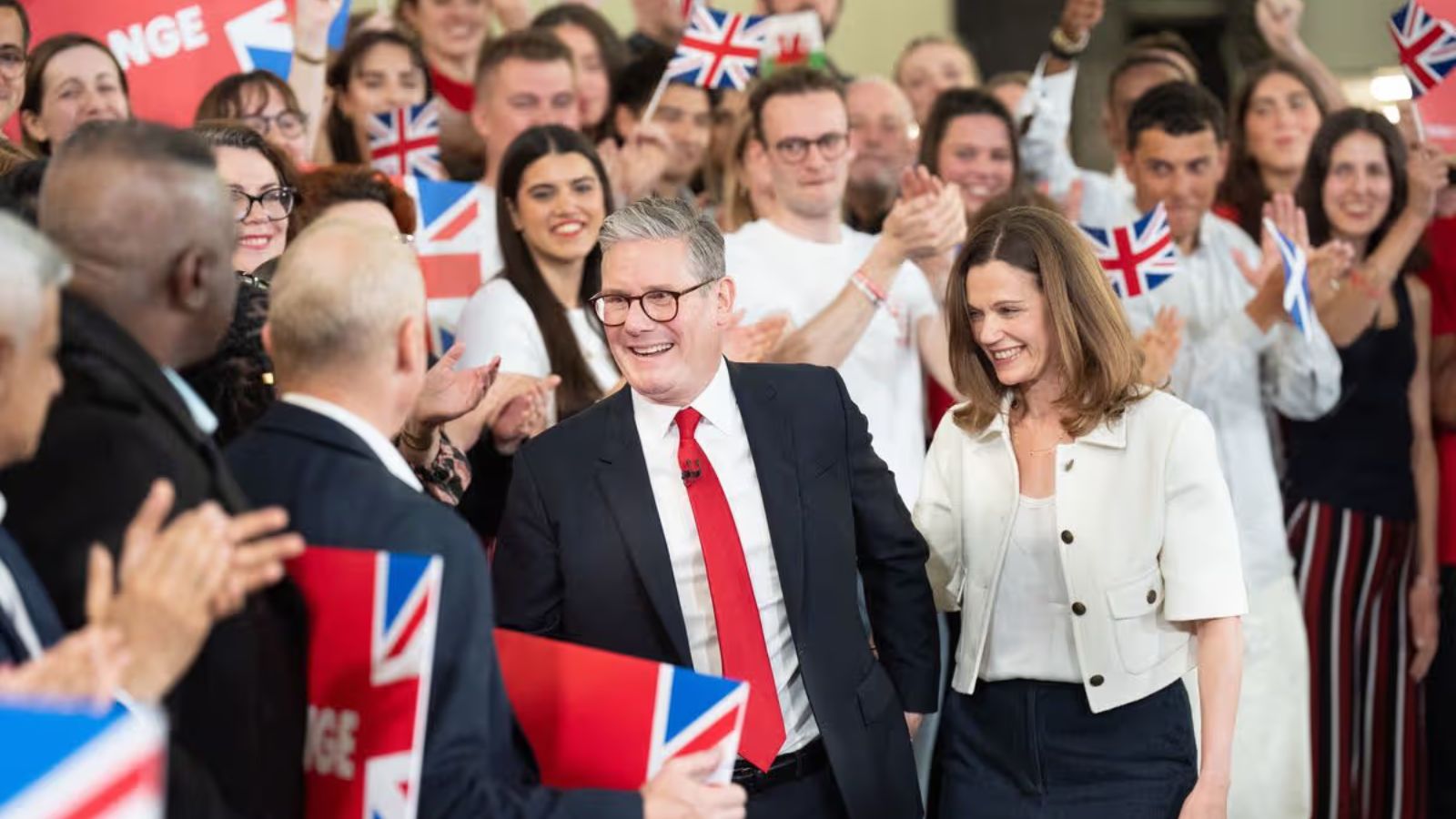
The 2024 election saw the Labour Party win over 400 seats in a landslide victory over the ruling Conservative Party. Overturning massive majorities and winning seats in areas Labour had never obtained, it ended 14 years of Tory rule and signalled a strong support for change across the country. Though the result saw Keir Starmer’s party turn the country red, perhaps the performance was not as strong as it first appears, as is represented by looking behind some of the figures of this election.
The 2024 General Election: By The Numbers: UK Election Facts: 10 Statistics About 20241. The Most Disproportionate Election Result on Record

Data from political scientist Michael Gallagher reveals the 2024 election had a disparity rating of 23.64, making this the most disproportionate election since the introduction of universal suffrage.
As the first-past-the-post-critical Electoral Reform Society wrote: “The General Election in 2024 was not only the most disproportional election in British electoral history but one of the most disproportional seen anywhere in the world. Underneath this headline lies a story – one of a volatile electorate, a fragmenting party system, and an electoral system that cannot keep up. The result for voters, and for parties, is a system out of step.”
2. The Lowest Vote Share for a Majority Party

For the first time since 2005, Labour had won a general election. Less impressive was that the party broke a record set 20 years when the party won a 66-seat majority on just over 35% of the vote.
In 2024, Starmer’s Labour Party won nearly two-thirds of the seats on a third of the vote, netting 63.2% of the seats on 33.7% of the vote.
The 9.7 million votes won by Labour was over half a million less than the 10.27 million won in 2019.
As The Guardian wrote: “Labour’s share of the vote, at 34%, is extremely low…2024 is clearly the lowest level of active popular support with which a party has started a period in power.”
3. The Second Lowest Turnout in UK History

Further undermining Labour’s authority is not just the lowest percentage of voters but the few people voting at all.
2024 marked the second-lowest turnout in the era of universal suffrage as 59.7% of the eligible electorate voted, dropping below 60% for the first time since 2001. This marks a 7.6% drop from 2019, according to the House of Commons library. In Wales, turnout dropped by over 10% while Yorkshire and Humber had the lowest turnout at 55.7%. At the constituency level, turnout dropped to 40.0% in Manchester Rusholme.
Turnout was particularly young among young voters. Only 37% of 18-24 voted, for example.
Dr James Prentice notes lack of faith, a lack of vision, and lack of trust, are leading factors in this apathy.
4. The Worst Ever Result for the Conservative Party

The Conservative Party crashed to Earth from 365 seats in the 2019 election to 121 in 2024, losing double the amount of seats they retained.
This measly 121 seats represents the Tory Party’s worst electoral performance in UK history. Their previous record was the 156 seats the party won in the Liberal Landslide election of 1906.
Their 23.7% of the vote is their lowest ever share of the vote, breaking their previous 29.2% of the vote won by the party in 1832.
Among the high-profile figures to lose their seats include Jacob Rees-Mogg, Defence Secretary Grant Shapps, and presumed leader-in-waiting Penny Mordaunt.
5. The Largest Fall in Vote Share For A Political Party

The Conservative Party’s aforementioned 23.7% of the vote in 2024 marked the largest decline in vote percentage in history. Just five years earlier, Boris Johnson netted the party 43.6% of the vote, the largest of any party since 1979.
This 19.9% swing versus the Tories overtook the 2015 record set by the collapse of the Liberal Democrat vote.
It also dwarfs swings of over 11% in previous Tory washouts in 1945 and 1997.
Moreover, a 45.1% swing from the Tories to Reform in Clacton, where Reform leader Nigel Farage contested the Conservative stronghold seat, marked the largest swing in any seat contested in a general election.
6. The First Prime Minister To Lose A Seat in the Post-War Era

In the constituency of South West Norfolk, former prime minister Liz Truss lost her seat to Labour in a three-way tight-knit race.
Only 18 months earlier, Truss had to resign as prime minister after a disastrous market-busting mini-budget, cutting her premiership short at less than two months.
Her seat was narrowly picked up by Terry Jermy of the Labour Party, overturning a 26,000-strong majority Truss had in 2019, when she won with nearly 70% of the vote.
Labour won the seat by just 630 votes with his winning 26.7% of the vote the smallest winning percentage for any candidate in English history.
The last former PM to lose their seat was first Labour prime minister Ramsay MacDonald, who lost his seat in 1935. However, at the time, he was standing under the National Labour banner. The last PM to thus lose their seat under a major party label was Herbert Asquith in 1924.
7. Only One Conservative Won Over 50% of the Vote

No constituency was a safe seat for the Conservatives, losing two of their five safest seats in 2019 to Reform and dropping to beneath 40% of the vote in the other three, where Reform won about a quarter.
The solitary individual to top 50% was Bob Blackman, 1922 Committee Chairman, who won 53.3% of the vote in his Harrow East constituency. Though his vote share was sliced by 1.3% from 2019, his majority increased from 8,170 to 11,680.
8. No MP Prior to the 1980s

For the first time in living memory, the Father of the House lost his seat when Peter Bottomley lost his Worthing West seat to Labour’s Beccy Cooper.
Though he has changed seats since, Bottomley was first elected to the precursor of his seat in 1975. It was new Tory leader Margaret Thatcher’s first by-election test, Harold Wilson was prime minister at the time, and the European Economic Community referendum had only taken place weeks earlier.
With Bottomley’s defeat as well as the retirement of veteran MPs Barry Sheerman and Harriet Harman, the longest continually serving MP was selected in 1983. The House thus now has nobody who was present during the 1970s Labour government, the 1979 election, or the Falklands War.
Edward Leigh is the Father of the House, elected in 1983, alongside fellow MPs Roger Gale and Jeremy Corbyn.
9. 115 Seats Were Won by Less Than 5% of the Vote

According to the UK Government’s report, just under a fifth of the seats were won with under 5% of the vote, up from 67 in 2019.
46 seats had a less than 2% margin and 19 had a less than 1% margin.
The closest seat was Hendon where Labour defeated the Conservatives by 15 votes, or 0.04%. A report by Compass found Labour won 131 seats with majorities under 5,000 votes.
Seven seats were won by under 100 votes. Some notable close results include James McMurdock being elected the fifth Reform MP by 98 votes in South Basildon and East Thurrock and future Shadow Chancellor Mel Stride narrowly clinging onto his Central Devon seat by 61 votes.
10. The Most Third Party MPs In A Century

The 400-seat win and a 179-strong majority for Labour may hide the rise of the third party evident in this election.
With Labour, the Conservatives, the Lib Dems, and new Reform Party, 2024 was the first time four parties won over 10% of the vote.
For the first time since 1923, over 100 third party MPs were elected.
A big influence on this is the Liberal Democrats, who won a record 72 seats, making them the biggest third party in over a century. Anti-Tory tactical voting helped them win over 60 seats compared to 2019.
Reform and the Greens had career-best performances of five and four seats respectively. Pro-Gaza independents also won five seats while Plaid Cymru held four and the SNP crashed down to just nine.
Looking at Reform’s current polling, the seats the Greens could take from Labour, and the independence movements in Scotland and Wales, 2024 may be seen as the year of the rise of the third parties who would shape British politics.
GRIFFIN KAYE.
Leave a Reply