A Bite Of Bacon

May 21st, 2014. Ed Miliband’s first stop ahead of local and European elections. Miliband probably was not too concerned thinking about tucking into a bacon sandwich prior to the day ahead yet it would become the image many associates with the MP for Doncaster North.
The image instantly became front-page fodder, after first published in The Evening Standard. Having a life of its own, it served to further illustrate the Leader of the Opposition’s awkwardness and proneness to gaffes; “fail[ing] to look normal” as The Independent put it. The pictures were not the most flattering it must be said, with bread gathering at the corners of his mouth, eyes glazed over, and clenched jaw across various photographs.
It was a natural thus a natural source of mockery for fellow politicians. David Cameron claimed during Prime Ministers Questions (PMQs): “I simply make this prediction…in a moment of two, he [Miliband] will be looking as awkward as when he ate that bacon sandwich.” Fellow coalition leader Nick Clegg of the Liberal Democrats was more sympathetic, remarking: “I think this is very unfair because I don’t think anyone looks very elegant [eating]…I could manage to produce an unflattering [photograph].”
Even UKIP’s Nigel Farage hit headlines when eating a bacon sandwich during a campaign trail.
The backlash from the messy-eating Miliband was enough to deter other politicians from similar image-hampering palava. Perhaps to avoid this, the opposite effect was achieved, as when PM David Cameron ate a hot dog with a knife and folk, he was largely seen as stuck-up and bizarre for such a culinary concept. He did, however, avoid photos as embarrassing as his political nemesis.
Despite the photo’s prominence prior to the 2015 general election thanks to The Sun, Miliband has claimed that the photo likely did not contribute to his loss in the election, with other notable gaffes such as his vague pledges printed onto a cenotaph. Also, yes, this is the first piece I’ve ever done mentioning the word “cenotaph” and I’ve already used it twice.
Ed, whose name typed into Google sees the first result being related to the bacon sandwich, has taken it largely in his stride, including on The Last Leg taking another sandwich photo on a cool motorbike in order to get him and a bacon sandwich famous for a different reason.
Simply, this scandal – if you can really call it that – was an unfortunate non-story. On a busier day with less eyes, the gaffe would have never been as inflated as it was. Had anyone, including Clegg or Cameron or Farage, else been eating, the same could have happened to them. Miliband was just unfortunate that this got out.
Corbyn’s No To Nukes

Upon being elected Labour leader in late 2015, Jeremy Corbyn got in trouble for committing the ultimate sin: being an honest politician.
Corbyn faced backlash for comments on BBC Radio 4 Today program, in which he said, “I am opposed to the use of nuclear weapons. I am opposed to the holding of nuclear weapons. I want to see a nuclear-free world. I believe it is possible.” He also criticised what he saw as extortionate spending on the Trident project, totaling a quarter of the defense budget at £100 billion.
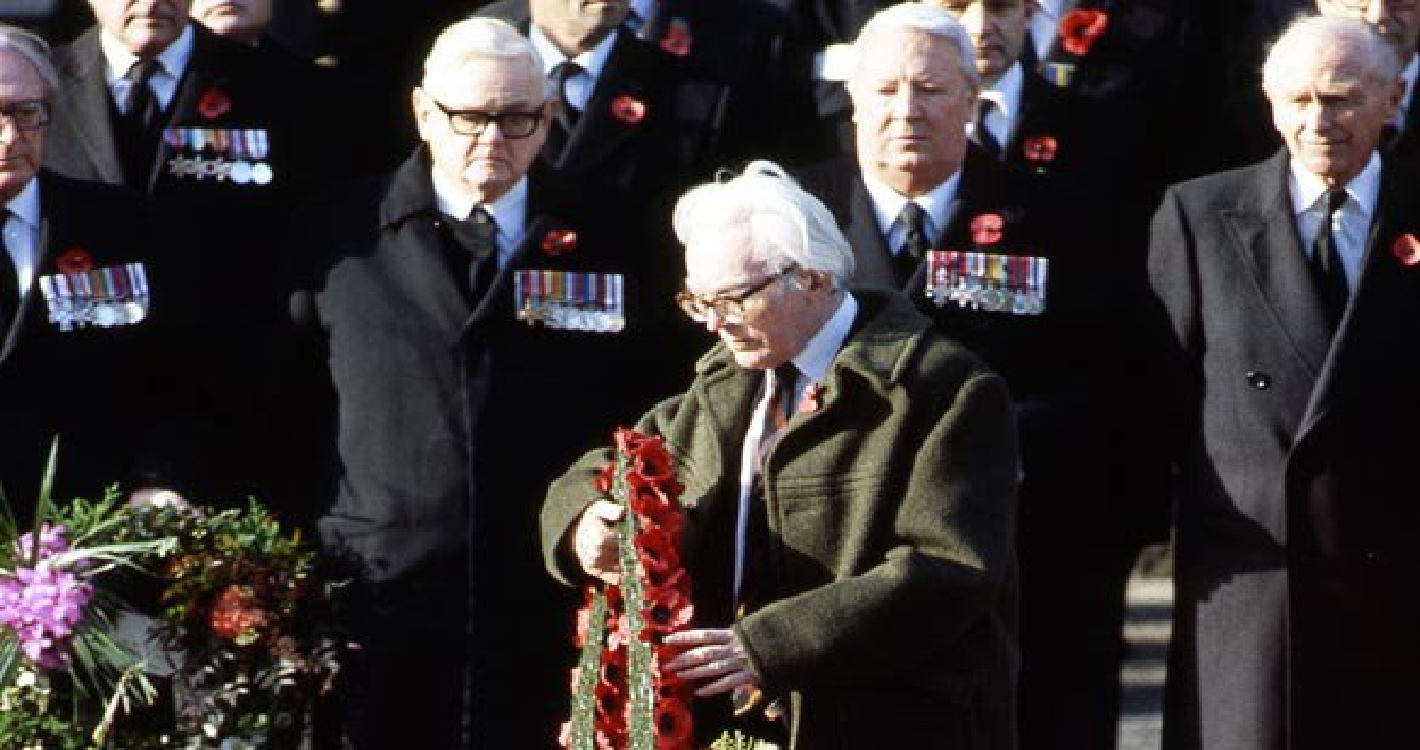
The decision surely should not have been surprising considering previous Labour dedication to disarmament, such as the aforementioned Michael Foot manifesto pledge – it was that same year Corbyn was elected to Parliament. Neither is pacificism a new Labour idea, displayed by Ramsay MacDonald – the first Labour PM – who was a pacifist during World War One.
The Conservation adds that: “Back in the day – pre-leadership – Corbyn was a high-profile opponent of the nuclear issue on both environmental and proliferation grounds”, described as a lifelong supporter of unilateral disarmament, including membership of the Campaign for Nuclear Disarmament.
Corbyn’s stern support of not firing nuclear weapons drew opposition from the Conservatives. Thinking of Corbyn as undermining a British deterrent and announcing it publicly, Foreign Secretary Boris Johnson retorted by saying: “I thought it was really spine-chilling to hear Jeremy Corbyn announce that all Labour’s support for our nuclear deterrent, all Labour’s support for our Armed Forces was completely meaningless because, when it came to the business of defending this country, he wouldn’t do it.”
Statistics also show the public’s disapproval of Corbyn’s comments, including an audience grilling on Question Time in 2017. The website Statistica found, through an online survey, that his comments made 31.3% of people less likely to vote Labour and just 19.9% more likely to vote Labour. His comments were described by The Economist as a “pacifist illusion” whilst The Washington Examiner said his plans featured “radioactive stupidity.”
The comments may not be agreed upon by all but to complain about this policy was to ignore socialist dedications for the prior century. Indeed, nuclear disarmament had been an official policy decades prior, and with Corbyn’s history, could people reasonably be outraged for what had been an established previous position? He would have been deplored for a U-turn. Corbyn simply showed loyalty and dedication to his beliefs and the past and saw hatred for something anyone could have reasonably predicted would happen.
Whether through gaffes, resented decisions, or over policy, Labour leaders have often seen derision over matters that really should never have been scandalous.
With the Labour Party being the second most important party and the party wishing to gain power, these controversies hit the group much harder with the ability to cause greater damage than it would to a sitting government. However, when Labour was in power, it also causes a sense of distrust and skepticism.
It just goes to show that in politics, even the littlest of matters can blow up into national issues – even when they really shouldn’t.
Leave a Reply