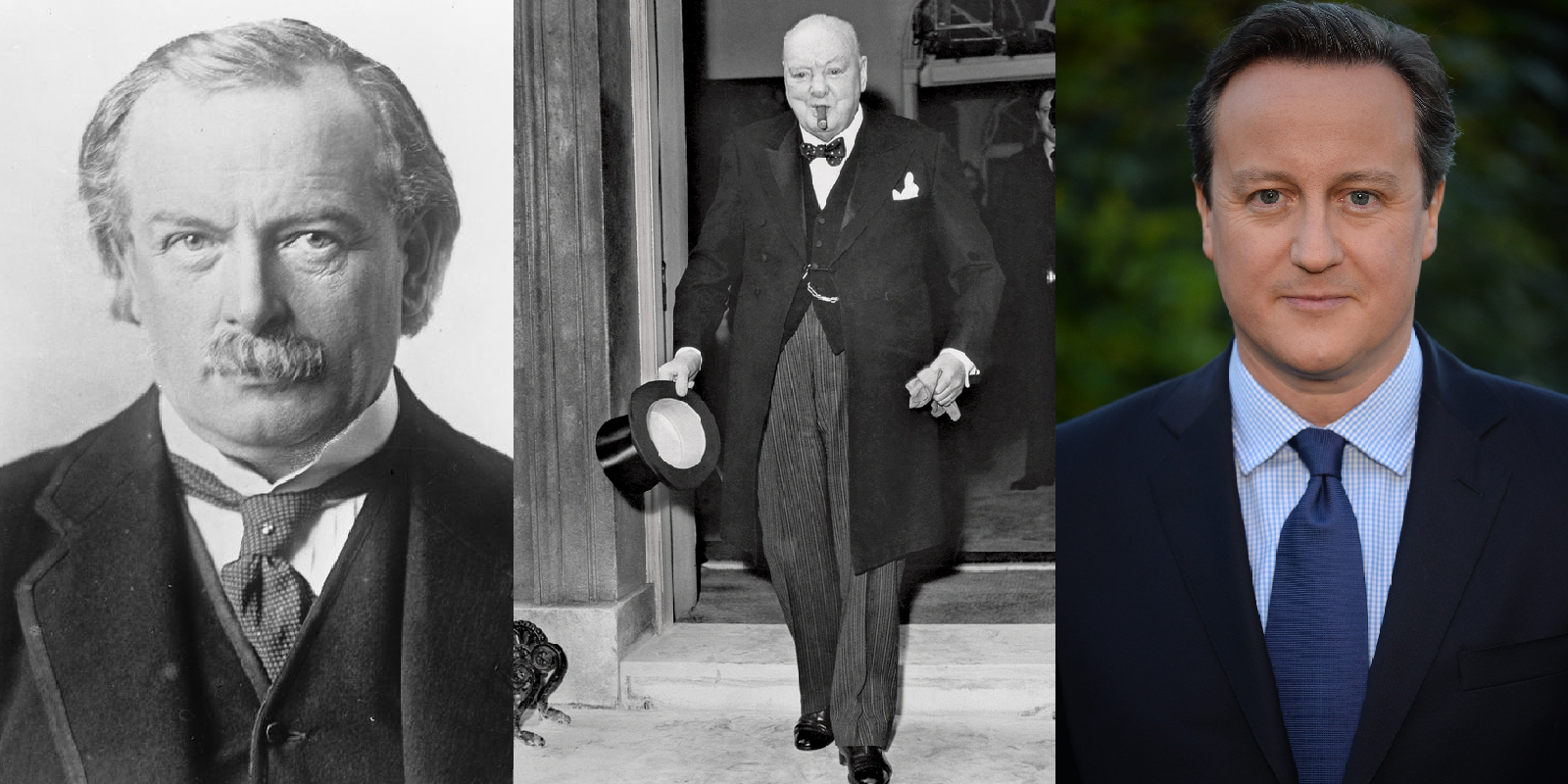
#16. Edward Heath

The careers of politicians after toppling from “the greasy pole” (what ex-PM Disraeli called the prime ministership) serve as interesting reading with often differing outcomes for different leaders. Some may move into the House of Lords such as Thatcher, some may move away to diplomatic work such as Blair, and Harold Wilson even made a failed attempt to break into show business – but one of the more surprising is Edward Heath.
Winning power in 1970, Heath’s short stint in power was plagued by both domestic and international social issues such as the Troubles in Ireland, Britain’s role in the EEC aka the Common Market, and the miners’ strike that led to the infamous ‘Three-Day Week’.
Losing power in 1974 to Wilson, despite tallying more votes, Heath lost the subsequent leadership election but remained a backbencher for nearly three decades, cutting a distinctive gate in the Commons. “Ted” became the Father of the House, stepping down in 2001 when in his 80s.
Having lost power in 1974, his death in 2005 – 31 years later – is the longest lifetime after leaving office.
#17. James Callaghan

For such an unremarkable figure, James Callaghan does have some rather intriguing claims to fame.
With Wilson declining in health and feeling burnout from politics, he resigned in 1976, followed by arguably the most star-studded leadership election in British history. In this, James Callaghan beat off competition from five powerhouses of the Labour Party: Michael Foot, Denis Healey, Anthony Crosland, Tony Benn, and Roy Jenkins – a result that may be deemed surprising considering that “Sunny Jim” was probably the least charismatic of that eclectic class.
The appointment made him the only person in history to have held all four Great Offices of State (PM, Chancellor of the Exchequer, Foreign Secretary, Home Secretary). Callaghan served as Chancellor from Wilson’s win in 1964 until crashing the pound in 1967, and transitioned afterwards to the role of Home Secretary. As Foreign Secretary, he was given the job of negotiations for Britain’s terms in the EEC and jumped to be elected PM after Wilson’s departure.
Callaghan memorably faced the Winter of Discontent in which widespread strike action halted the nation. The book Crisis? What Crisis? Britain in the 1970s – named after the infamous Sun headline – paints a grim picture of events, recalling: “Two million workers were threatened with being laid off if the strikes continued, pigs were reported to be resorting to cannibalism as food supplies to farms ran low, supermarkets began rationing essentials such as butter and sugar, and newspapers shrank in size as supplies of newsprint dwindled. ‘The day when Brussels sprouts became a luxury,’ ran a headline in The Guardian.”
Faced with a national crisis and without a majority, often relying on Liberal help through a demand and supply deal, Callaghan lost a no-confidence vote in 1979 and lost the following general election to Margaret Thatcher, placing Labour out of power for nearly two decades.
Losing power in 1979 in his mid-late 60s, his age at resignation has not been beaten since. Callaghan lived until 2005, dying one day short of his 94th birthday making him the longest-lived PM of all time. His death occurred less than two weeks after the death of his wife of 66 years Audrey. In comparison, the USA’s longest-lived president is Jimmy Carter, still alive as of writing at the age of 98.
#18. Margaret Thatcher

Thatcher’s premiership is arguably the singular most divisive in British history. An imperial prime minister who commanded a strong majority crushed the unions, and defended the Falklands, Thatcher gained many opponents on the way.
When the longest-serving PM of the 20th century passed away in 2013, Britain engaged in an extensive public tribute, with a large state funeral with military honours. Her death was not universally mourned, however, with George Galloway referring to the commemoration as the “canonisation of [a] wicked woman.”
A Facebook campaign successfully rallied for sales of the Wizard of Oz song “Ding-Dong! The Witch Is Dead” in the aftermath. Considering the popular hate directed towards the “Iron Lady”, it achieved its goal and charted at number two although the BBC refused to play the track on their chart rundown.
She also once spanked Christopher Hitchens, which is certainly something!
#19. John Major

The ever-unpopular John Major took over the reins from Thatcher and served from 1990-1997. The Conservatives were trounced in 1997 with Labour (‘New Labour’) gaining over 400 seats – the only party to do in the 20th century.
The win was inevitable with Major a far less engaging political character than Blair whilst suffering from his own backfiring ‘Back to Basics’ campaign. Losing every opinion poll since Blair’s leadership, Major became the youngest sitting modern PM to lose an election, having recently passed his 54th birthday. Had he lost in 1992 – as many polls had reflected – he would have therefore set the record even lower.
If Rishi Sunak loses the next election, which John Major be able to see as the oldest living ex-prime minister, he would break this record.
#20. Tony Blair

In May 2000, Cherie Blair gave birth to Leo, the first child born to a sitting PM in over 150 years. Leo was Tony Blair’s fourth child albeit the first one born whilst he was in office and the first one for whom he was present throughout.
Despite the last child of a PM being born in 1849 to Lord John Russell, Blair has been followed in the decades since by both David Cameron and Boris Johnson – the latter producing two children whilst prime minister.
Unfortunately, the Blair’s fifth child was not to be after a miscarriage of their unplanned child, which The Guardian recorded: “[took] Westminster and the country as a whole by complete surprise.” Unfortunately, this is not the only such occurrence of this, as Carrie Johnson suffered a miscarriage prior to the birth of their second child Romy whilst the same year as Blair’s miscarriage in 2002, Gordon Brown’s daughter Jennifer was born premature and died shortly after a brain haemorrhage.
Leave a Reply