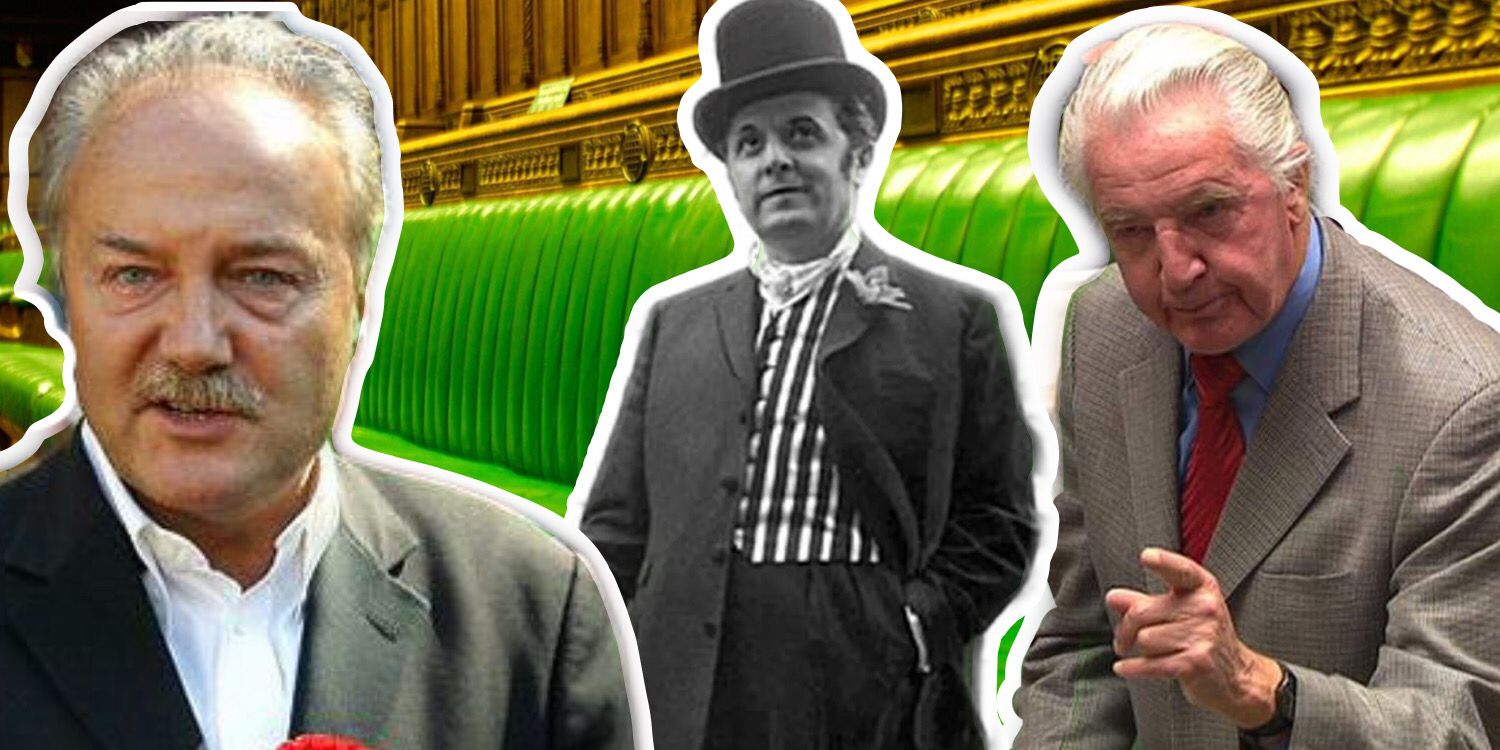
The great political scientist, historian, and constitutionalist Vernon Bogdanor has commented that: “No longer should MPs not in the government be seen as mere backbenchers, a term that highlights they are the leftovers after a government has been formed.” This statement reflects how those elected politicians who are not government ministers can also have great influence, far greater than their name may imply. Indeed, the role of backbench MPs is arguably grave and far-reaching, with some ability to dictate leadership and legislation.
As this piece shall discuss, being a backbencher means that MPs can have a sizable impact, even if that comes with some drawbacks.
Determining Leadership
To quote Yes Minister’s Jim Hacker, “[The electorate] can’t vote against me ‘til the next election. Backbenchers can do it at 10 o’clock tonight!”
Indeed, backbench MPs do have a great say in their party leadership, with the ability to make votes of confidence in their head representative. Some prime ministers only managed to secure the highest elected office in the UK through votes by MPs exclusively, with Gordon Brown and Rishi Sunak serving as recent examples.

Moreover, backbenchers can choose to topple the current leadership. In 2003, the Conservatives ousted leader Iain Duncan he Smith by 90 votes to 75, removing the characteristically dour leader before he was able to contest a general election. Similarly, Liz Truss was on the verge of a no-confidence vote just weeks into her premiership after the powerful backbench collective the 1922 Committee, headed by Graham Brady, lost faith in their leader, in a decision that The Financial Times remarked “ultimately sealed her demise.”
A more direct attempt to usurp the party’s leadership and thus direction can be by staging a leadership contest, as done by backbenchers Michael Heseltine for the Conservative Party leadership in 1990 and Tony Benn for the Labour Party Deputy leadership in 1981.
MP Peter Mandelson, even if not in the Shadow Cabinet, became a household name during the 1990s for his integral role in the 1997 election campaign, refining Tony Blair’s (and his own) public image.
Private Member’s Bills
Despite not being a part of the frontbenches, MPs can nonetheless create legislation from the backbenches, namely by the use of Private Member’s Bills (PMBs). Allowing MPs to introduce legislation to the House since the 1940s, these can allow members to have a greater legislative voice.
Some of the most important PMBs were pushed through during the ‘Civilised Society’ era under Home Secretary Roy Jenkins, which saw a liberalisation of British laws.
Amongst these PMBs were the Murder (Abolition of the Death Penalty) Act 1965 (introduced by Sydney Silverman), the Sexual Offences Act 1957 (introduced by Leo Abse – who introduced the most PMBs of any 20th century politician), and the Abortion Act 1967 (introduced by future Liberal Party leader David Steel).

The effect of these acts was to remove the death penalty, legalise homosexuality, and legalise abortion in Great Britain – all gigantic contributions to the modern-day statute book.
However, PMBs face grave challenges before they can come into law.
PMBs rarely pass. Data from Robert Hazell and Fergus Reid tells us that only 5% of PMBs are passed; using a sample of 2,138 pieces of proposed legislation, they commented only 108 were passed.
This is because bills can be killed off rather easily. As MP Richard Ottoway has explained: “For a private member’s bill to be successful it has to have virtually unanimous support from colleagues.”
As such, the 2016 Turing Bill, which would have pardoned 50,000 people prosecuted for homosexual offences, was filibustered (‘talked out’) by Justice Minister Sam Gyimah. The bill, introduced as a PMB by the Scottish National Party’s John Nicholson, had momentum, with public backing from celebrities like Benedict Cumberbatch and Stephen Fry. Conservative MP Christopher Chope has come under criticism from his own party when being the sole objector to – and therefore able to veto – bills concerning female genital mutilation (FGM) and upskirting.
Even cross-party encouragement from party bigwigs can stall at this stage, as demonstrated by the failure of a House of Lords reform bill in 2005, backed by former Tory Chancellor Ken Clarke and former Labour Foreign Secretary Robin Cook.
The UK Parliament website nonetheless notes that “although only a minority of PMBs become law, they are a valuable way for backbench MPs to raise issues not on the government’s agenda.”
Rebellions: MPs Who Defy Their Party
MPs can make their dissatisfaction clear by voting against the wishes of their party, hoping to sway the result.
In the book The Rebels: How Blair Mislaid His Majority, author Philip Cowley fights the notion that backbench MPs are “gutless and feeble…too willing to do what their political masters tell them; terrified to follow their own consciences for fear of what might happen to them, they can be led by the nose to vote for almost anything put before them.” Instead, he adds that during the 1950s, their were two entire parliamentary sessions when not a single MP voted against their own party, toeing the line every time.
Those who choose to rebel often are able to raise their political profile. For example, prior to becoming party leader himself, Jeremy Corbyn was the most rebellious Labour MP throughout the New Labour ministry. Rebelling on over 400 occasions, Corbyn opposed some of the most controversial pieces of legislation, such as the invasion of Iraq, the Prevention of Terrorism Act 2005, and increases in tuition fees.

Meanwhile, The Times noted in 2021 how David Davis was the most rebellious MP in Parliament this parliamentary term.
In another example, backbench Europhile Ken Clarke would be the sole Conservative MP to vote against triggering Article 50 in 2017.
Rebellions: Acts Prevented
Rebels en masse can prevent legislation passing the House altogether, stopping them from coming to fruition.
In January 2019, Theresa May suffered a 230-vote loss in the Commons, the biggest defeat of a sitting government on record. An unprecedented 118 Conservative rebels voted down the prime minister’s Brexit deal in a result referred to as “a catastrophic defeat” by Leader of the Opposition Jeremy Corbyn.

A similar loss caused by mass rebellion took place a decade earlier when 27 Labour MPs went against the government to support a Liberal Democrat motion allowing Vietnamese Gurkha soldiers to settle in the UK. Amongst the rebels was backbench MP and ministerial aide Stephen Pound, who resigned from his position as a Parliamentary Private Secretary (PPS). This marked Brown’s first loss, Labour’s first Opposition Day defeat since taking power, and the first time any government had lost an Opposition Day debate since 1978.
The only government bill to face defeat during Margaret Thatcher’s premiership occurred in 1986 with the Shops Bill. On the second reading, 72 Conservative backbenchers defied a three-line whip and voted against the act, which would have deregulated Sunday shopping. As a result of the backlash, the bill failed, falling short by 14 votes.
Rebellions: Removing The Whip
Many rebellions fail, due in part to the whip system meaning any government with a comfortable majority can bank on being able to pass desired legislation. Tony Blair was first defeated in 2005, whilst the whole New Labour regime only lost votes on seven occasions. (This fluctuates between leaders. Those in minority governments such as Theresa May [2017-2019] and Jim Callaghan suffering a considerably greater number of losses.)
The government whips force MPs to vote with the leadership or else risk sitting as an independent without party backing for re-election.
Comparatively, the US’s lax whip system means members cannot be so easily stripped of party membership. When Trump’s campaign promise to repeal Obamacare failed in the Senate, rebelling Republicans Lisa Murkowski, Susan Collins, and John McCain faced little punishment.
George Galloway, for one, lost the whip of the Labour Party in 2003 after his outspoken opposition to the Iraq War which brought the party “into disrepute”. He warned that fellow anti-war backbenchers were also at risk of expulsion. In 2005, Galloway, as a Respect Party candidate, fought back, unseating Blair loyalist Oona King.

Also ousted for legislative mutiny were 21 Conservative MPs in 2019. This occurred after they voted on a motion against a no-deal Brexit. Suspended by Boris Johnson in the biggest mass parliamentary purge since the 1994 Maastricht rebels, it included prominent figures such as Father of the House Ken Clarke, former Chancellor Philip Hammond, and former Tory leadership contest candidate Rory Stewart. The latter chastised the whip system as one that makes the UK an “elected dictatorship.”
Rebellions: Threats and Deselection
Sometimes, the threat of removing a whip can be daunting enough. In 2022, Tory MPs were allegedly manhandled to vote against a bill banning fracking, one with a three-line whip. Conservative Deputy Chief Whip Craig Whittaker wrote to Tories, telling them: “We are voting NO and I reiterate, this is a hard 3 line whip with all slips withdrawn.” In the end, no Conservative MP voted for the bill.
MPs can also feel the backlash of their disobedience at the local level. Those who disagree with the parliamentary party can be punished by their local party association by being deselected.
Some are deselected over their hostility to the party leader, as demonstrated by Anthony Meyer’s deselection prior to the 1992 election after staging a challenge to Margaret Thatcher in a 1989 leadership contest. Moreover, in 2023, Tory veteran Damien Green was rejected from standing in the new Weald of Kent seat which will replace his current Ashford constituency, seen by many as a political decapitation of those who helped befall Boris Johnson’s premiership.

Elsewhere, legislative rebels can be removed by local party members. Labour MP Frank Tomney would be deselected in 1976, whose illiberal views on prominent matters such as race and homosexuality, leading to one former party official commenting: “Some of his policies would have gone down well in the National Front.”
Furthermore, in 2007, Bob Wareing was rejected from his Liverpool West Derby seat, with his constituents instead selecting ex-Deputy Leader of the House Stephen Twigg. Wareing, a member of the Socialist Campaign Group who had been one of a dozen Labour MPs voting for an inquiry into the Iraq War, referred to the loss of his constituency’s party’s support the work of a “New Labour Mafia.”
Committees
Backbenchers also serve on influential committees, which can serve as an effective form of scrutiny on the actions of the government.
For example, backbencher Chris Bryant is the chair of the Commons Select Committee, the panel that has recommended the suspension of several MPs from the chamber, including Owen Paterson, Chris Pincher, and Peter Bone as a few examples from the 2020s.
Bryant too serves on the larger Liaison Committee, the only committee that is able to annually scrutinise the prime minister. In 2023, Rishi Sunak was criticised by Bryant for not reading a three-page report by the Privileges Committee but having time to attend a cricket match. These sittings often have widespread media coverage.

Non-minister Harriet Harman too received publicity for her chairing of the Privileges Committee during its report on Boris Johnson’s lockdown parties. The Partygate report, which recommended Johnson’s suspension, was heavily criticised by the former PM, who commented: “It is for the people of this country to decide who sits in Parliament, not [committee chair] Harriet Harman.”; several other high-profile MPs spoke out too. The 90-day suspension would have meant a by-election, with Johnson instead choosing to resign from the Commons.
Committees: Success/Failure Rate
The role of bill committees is that they read and review government bills, able to make amendments. Data from Meg Russell and Philip Cowley notes that: “Of those government amendments with substance that actually changed any of the bills, over 60% – 117 in total – were traceable to influence from nongovernment parliamentarians.”
Current significant bills in the committee stage include the Media Bill to reform regulation on public service broadcasting and the Renters (Reform Bill) to abolish section 21 or ‘no fault’ evictions.

Yet there are weaknesses to committee powers. The ability of backbenchers is limited by the fact the governing party has an inbuilt majority, making it likely those appointed and serving will vote in the interests of their leadership. Even then, the government has no need to comply or agree to amendments made.
Certain group are too limited, sitting on committees without much of a voice. For example, on the committees of Defence and Foreign Affairs, the members were 93% male from 1979-2017.
Speeches
Sometimes, the most effective form of expression is the simplest.
Many parliamentary speeches have become the stuff of political legend, from Robin Cook’s resignation over Iraq to Geoffrey Howe’s trenchant tirade in 1990.
Regarding backbenchers, however, few have much such a mark through their comments in parliament as Dennis Skinner. “The Beast of Bolsover” would regularly make snide remarks during the State Opening of Parliament, often espousing views relating to his ardent socialist views. He has also been kicked out of the Commons on several occasions, including for calling David Owen a “pompous sod”, calling John Gunner “a little squirt of a minister”, and – most famously – calling prime minister David Cameron “Dodgy Dave.”

On the opposite side of the House, Conservative MP Charles Walker has made a number of impassioned speeches which caught national attention, such as speeches against COVID lockdowns and the Public Order Bill. Perhaps his most sharp however was in an interview given during Liz Truss’s brief time as PM, calling the government’s direction “a shambles and a disgrace” and led by “talentless people.”
Using The Media
The attraction of TV cameras too provides an outlet for powerful speeches.
Prime Minister’s Question Time (PMQs) has given backbenchers the opportunity to raise concerns and question the prime minister in a televised format each week.
For example, unimpressed by Boris Johnson’s explanation for Partygate, David Davis – never made a minister under the prime minister – quoted what Leo Amery told Neville Chamberlain in 1940: “You have sat there too long for all the good you have done. In the name of God, go!”
Things were not much better at his first PMQs, where Labour’s Tanmanjeet Singh Dhesi delivered an emotional rant about off-colour remarks Johnson had previously made about religious clothing, earning him a round of applause on the party’s benches. Although not in PMQs, he was further attacked later in the day by Ken Clarke who, shortly after being stripped of party membership, remarked that Johnson “has a tremendous skill in keeping a straight face whilst he’s being so disingenuous.”
Another televised comment that received great attention was made by rebellious Labour MP Bob Marshall-Andrews during coverage of the 2005 election. Thinking he had lost his seat, he unleashed on Tony Blair, blaming the Iraq War – which he had adamantly opposed – for causing the loss and publicly calling for the PM to step down. After Blair’s 2007 resignation, Bob celebrated and stated on Have I Got News For You that he did not care if Blair were to become beloved as long as he “stuffs off.”
Epilogue: A Reserved Influence?
The concept that backbench MPs seemingly are lame sheep, castrated of any real power, is by no means new. As early as the 1960s, leader of the House, Richard Crossman uttered: “The whole of parliament is geared not to help backbenchers criticise ministers but to help ministers overcome backbenchers.”
It is obviously true that they have less power than frontbench MPs but say they are devoid of all authority is to severely undermine them.
It obviously helps if those filling up non-ministerial positions have had previous roles of authority, giving them greater recognition and status, allowing bigwigs such as the aforementioned Tony Benn, Ken Clarke, and Michael Heseltine to wield authority from the backbenches. Even then, those who have never been in a position of power such as Dennis Skinner – who refused any parliamentary patronages throughout his career – have still been able to rise to prominence.
Whether it is on legislation, leadership, or other matters, it has been above demonstrates that backbenchers are able to make a name for themselves and control some level of importance in parliamentary proceedings.
As for the limitations, the power lies with the leadership to be able to mute those choosing to step out of line – whether that is by forcing the hand of its majority, condemning the actions of those involved, or removing the party whip. The frontbenches are the base of power for party political matters but it can all be thrown into disarray by the backbenches which serve as a check on the government.
At the end of the day, the Cabinet may hold the greatest influence but backbenchers represent the majority – and are more than willing to make their voices heard.
GRIFFIN KAYE.
Leave a Reply